St Anthony’s Well: A Community Effort to Protect a Sacred Water Source
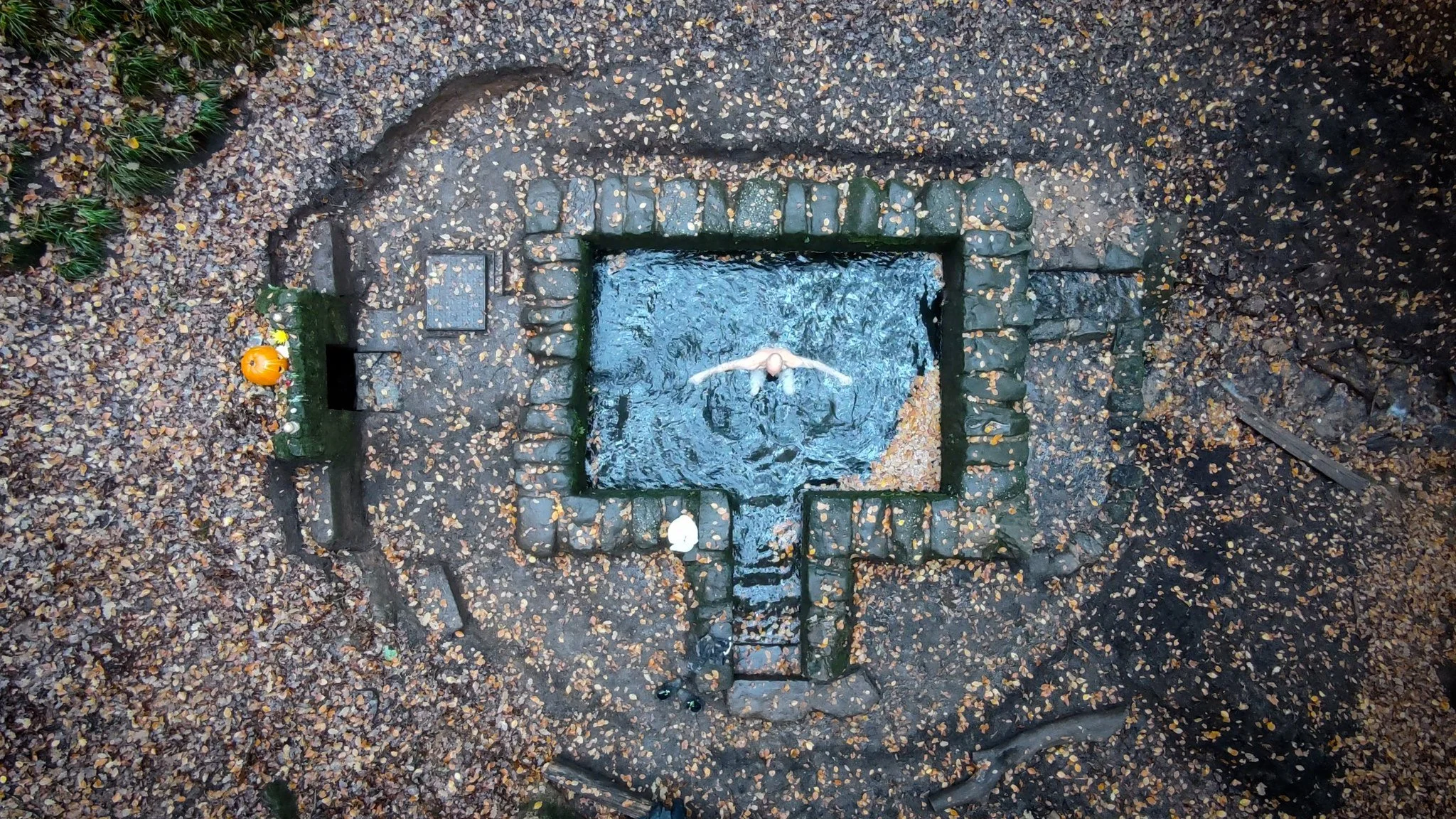
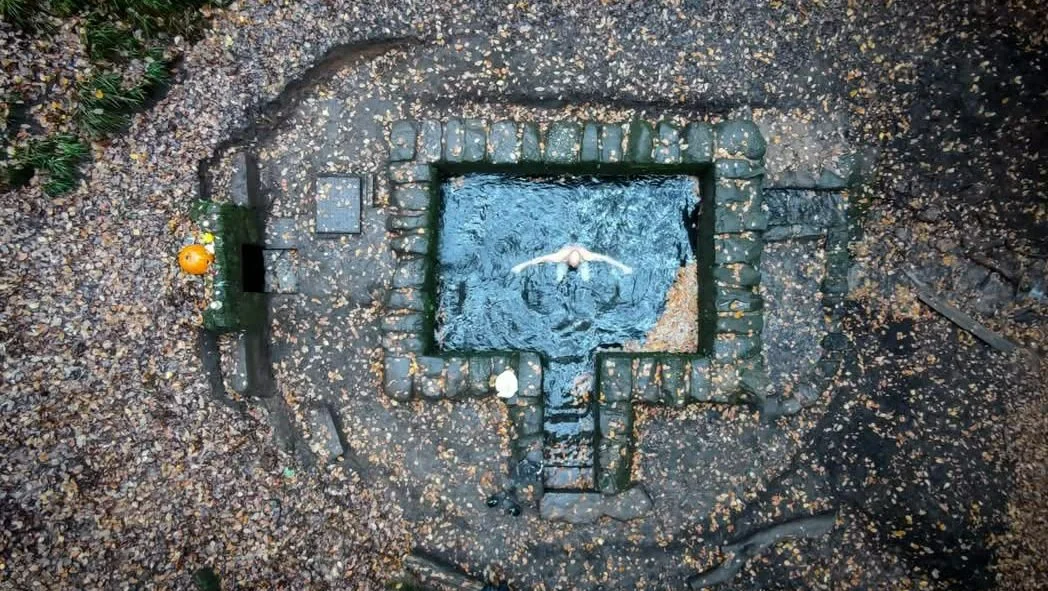
Photo Credit Andy Squiff, Squiff Eye
This Samhain weekend marked another powerful moment of collective care at St Anthony’s Well.
Around four years ago, St Anthony’s Well was fully emptied and cleaned by hand after diverting the main water flow. At the same time, this period marked the beginning of a wider commitment: mapping and checking several of the regularly used wells and springs across the Forest of Dean, and supporting community-led stewardship of wild water sources.
Since then, SAWFOD has also completed a full redesign and restoration of Bordon Spring — the most used wild water collection point in the Forest of Dean — located just around the corner from St Anthony’s Well. That work involved practical repair, redesign, and completion of works to support safer, more resilient access to clean spring water.
This work is slow, physical and muddy, but deeply worth it.
Sacred water doesn’t survive on good intentions alone — it survives because communities choose to show up.
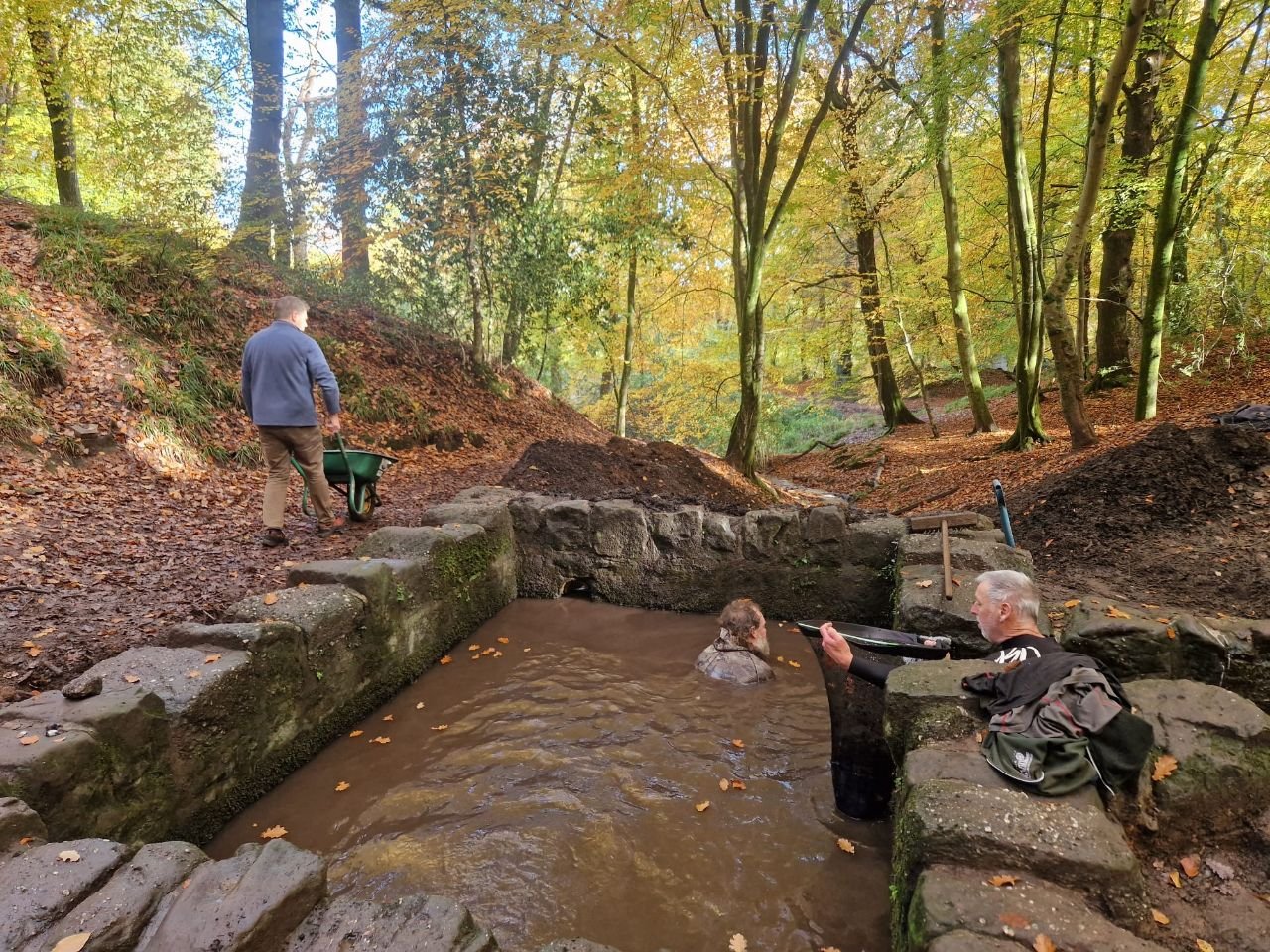
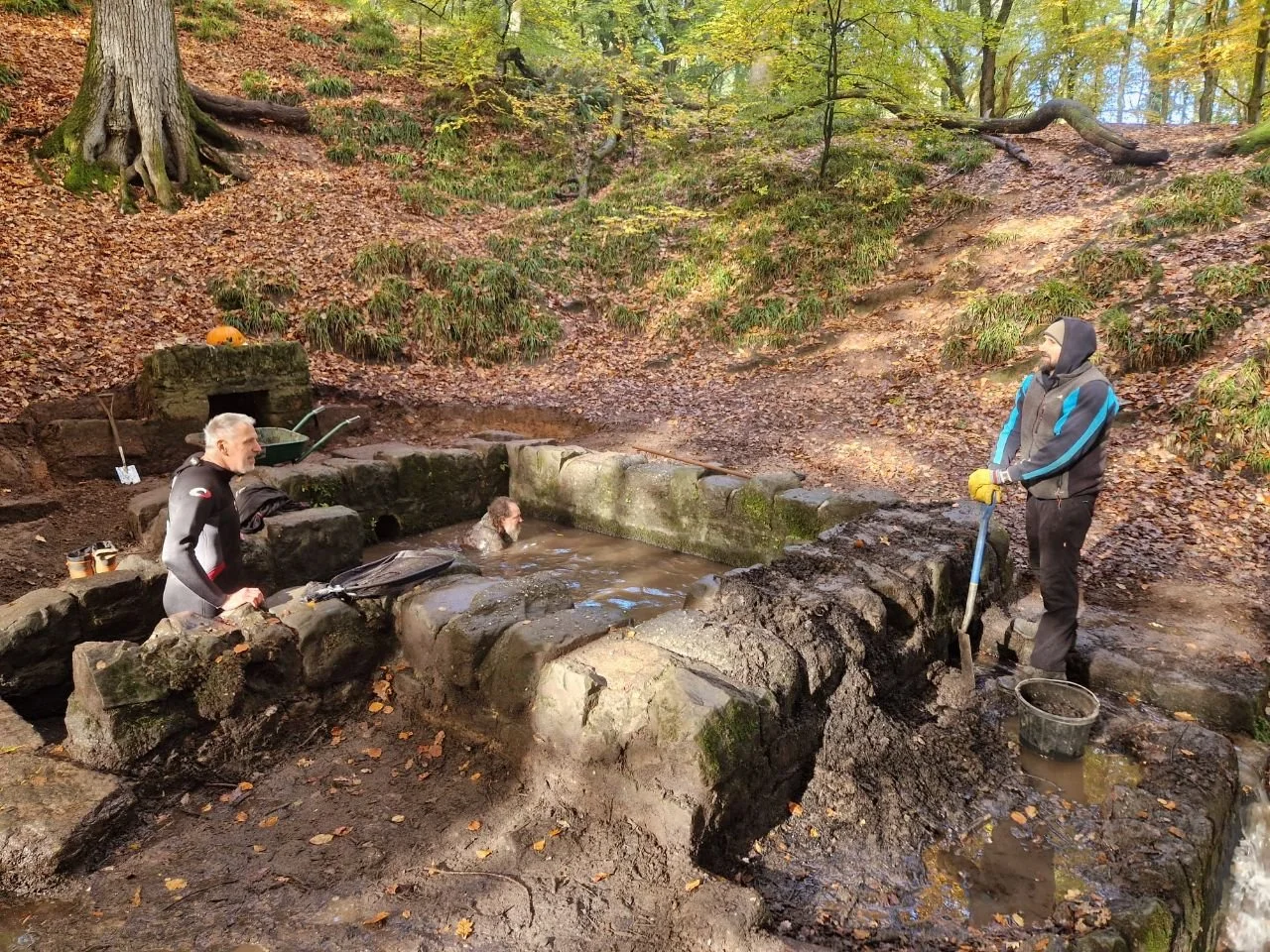
Over 20 local volunteers gathered with spades, determination, and good humour to continue the work of protecting one of the Forest of Dean’s most treasured and healing water sources.
The recent Samhain gathering continues this longer lineage of care, relationship, and responsibility to place.
Day 1 – Samhain Gathering
(Friday 31st October)
Samhain marks the turning of the year or New Year in the Sacred Earth calendar.
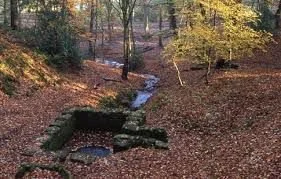
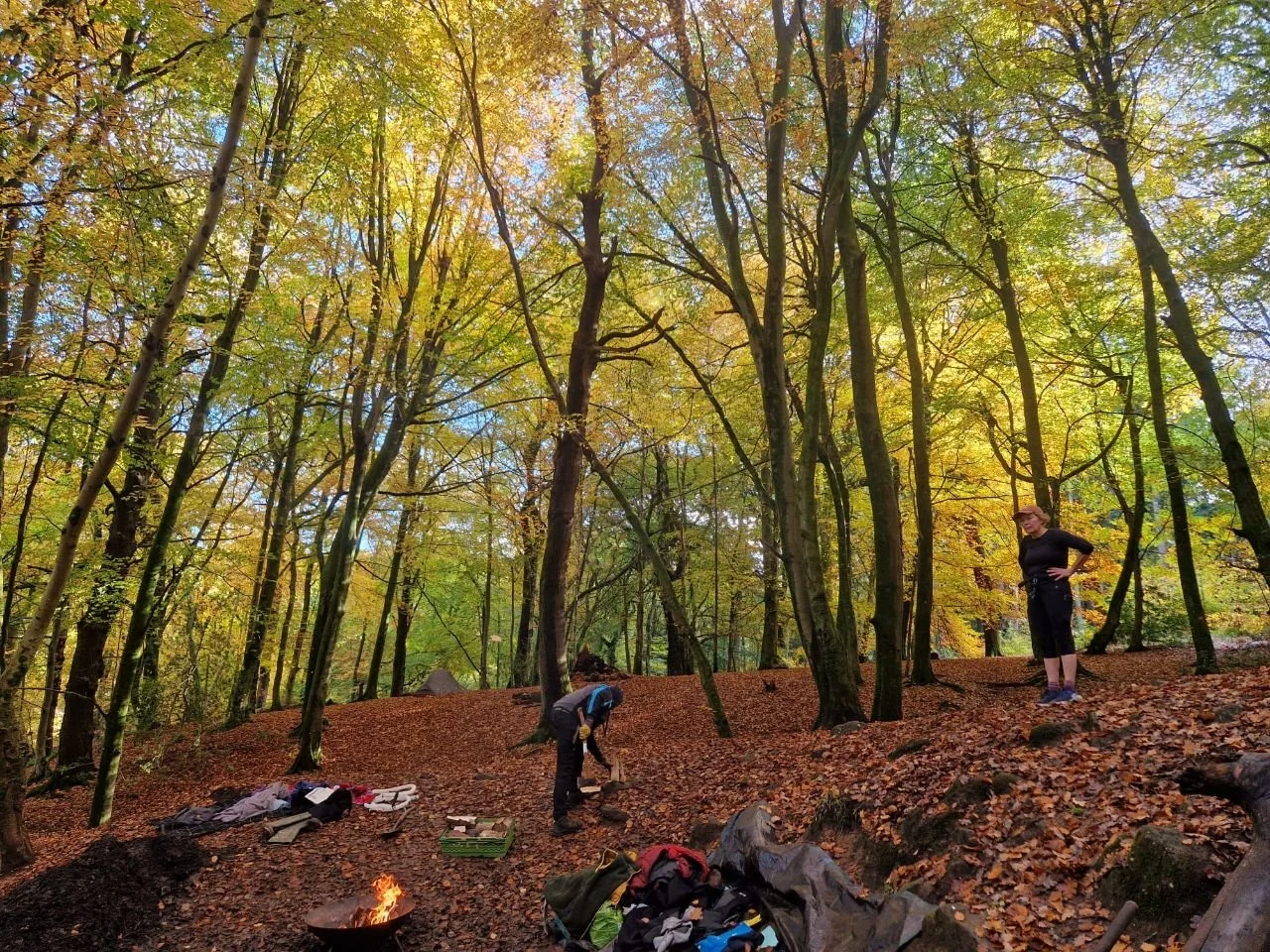
Community members gathered at St Anthony’s Well in the Forest of Dean to begin a weekend of care for this sacred spring, loved by many.
The gathering was community-led, rooted in respect and permission.
We began by making offerings and asking consent from the sacred waters before any work took place.
People arrived across the evening, bringing food, warmth, music, tools, and shared intention.
Day 2 – Main Clean-Up Day
(Saturday 1st November)
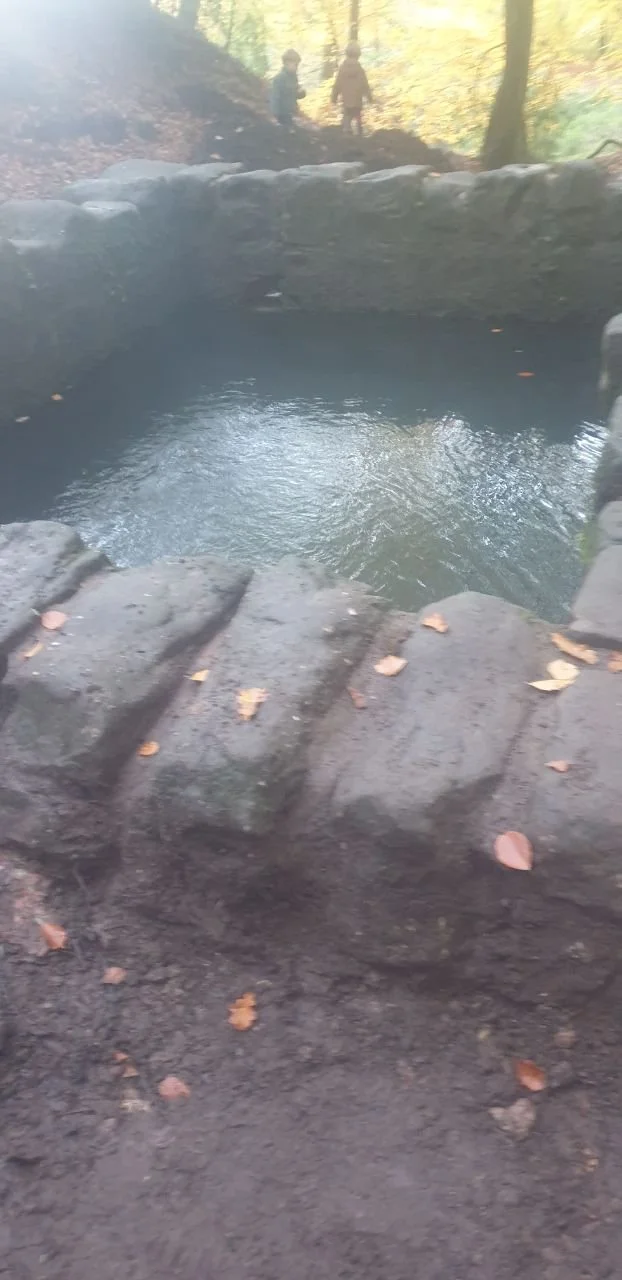
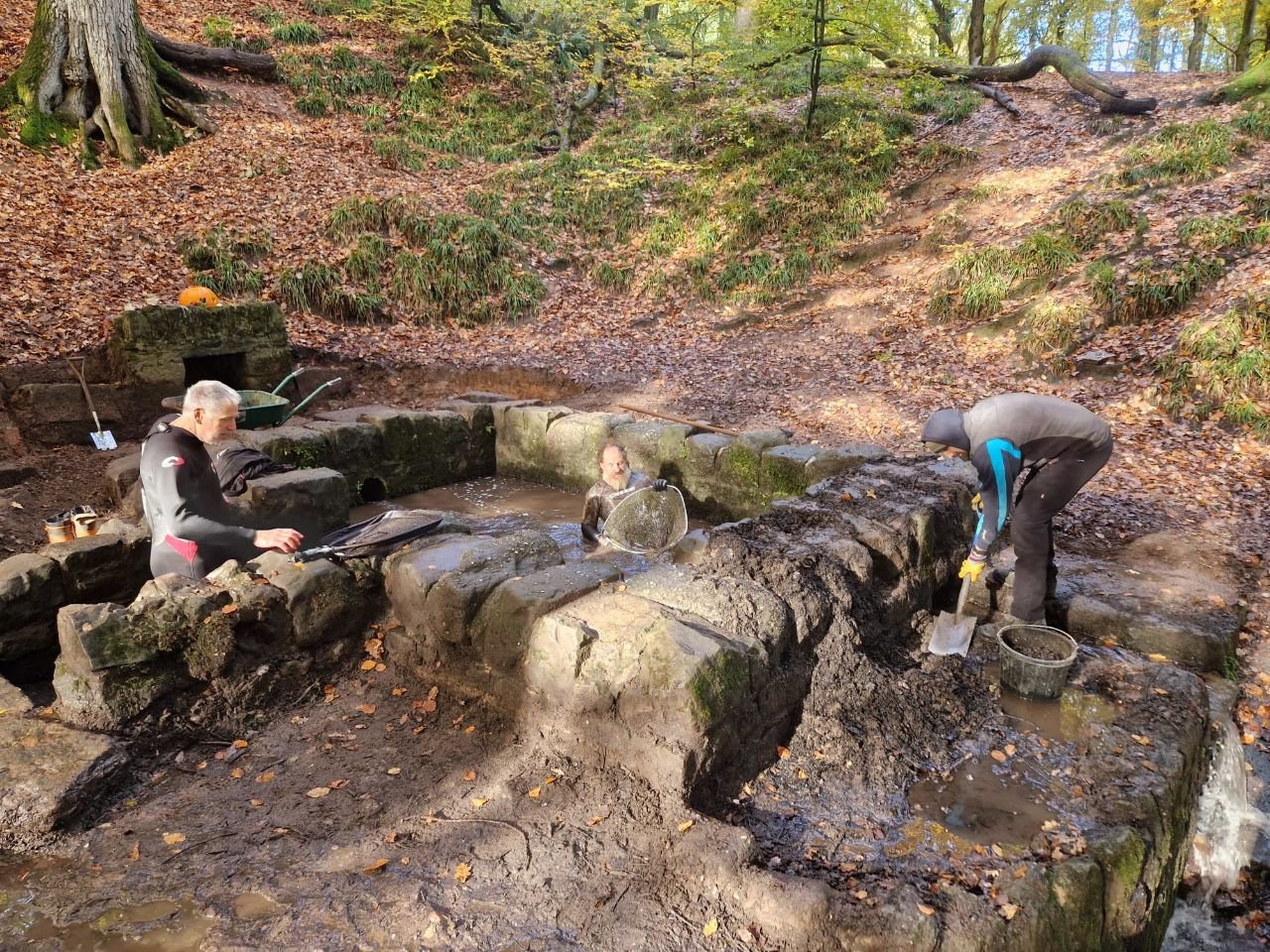
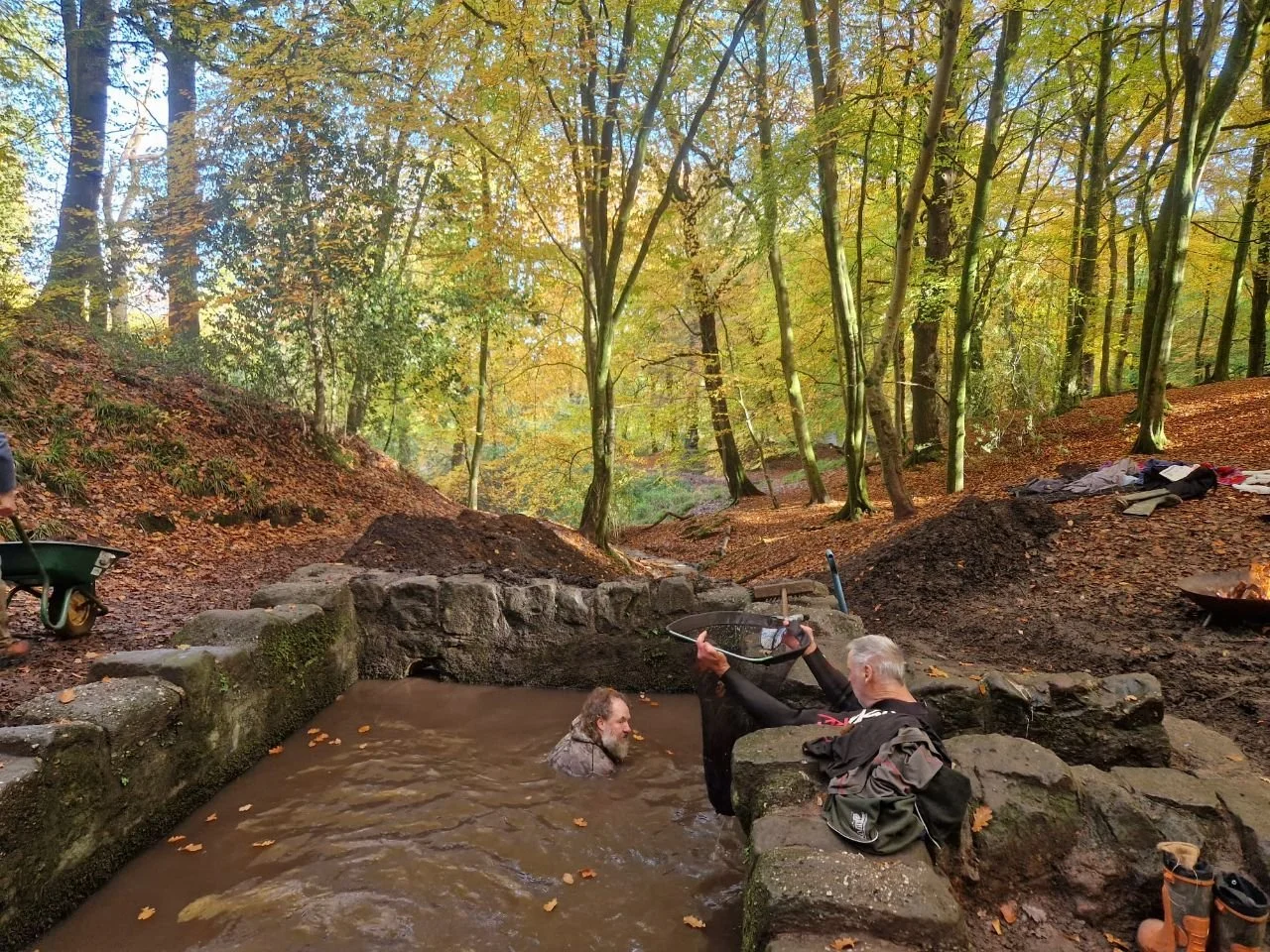
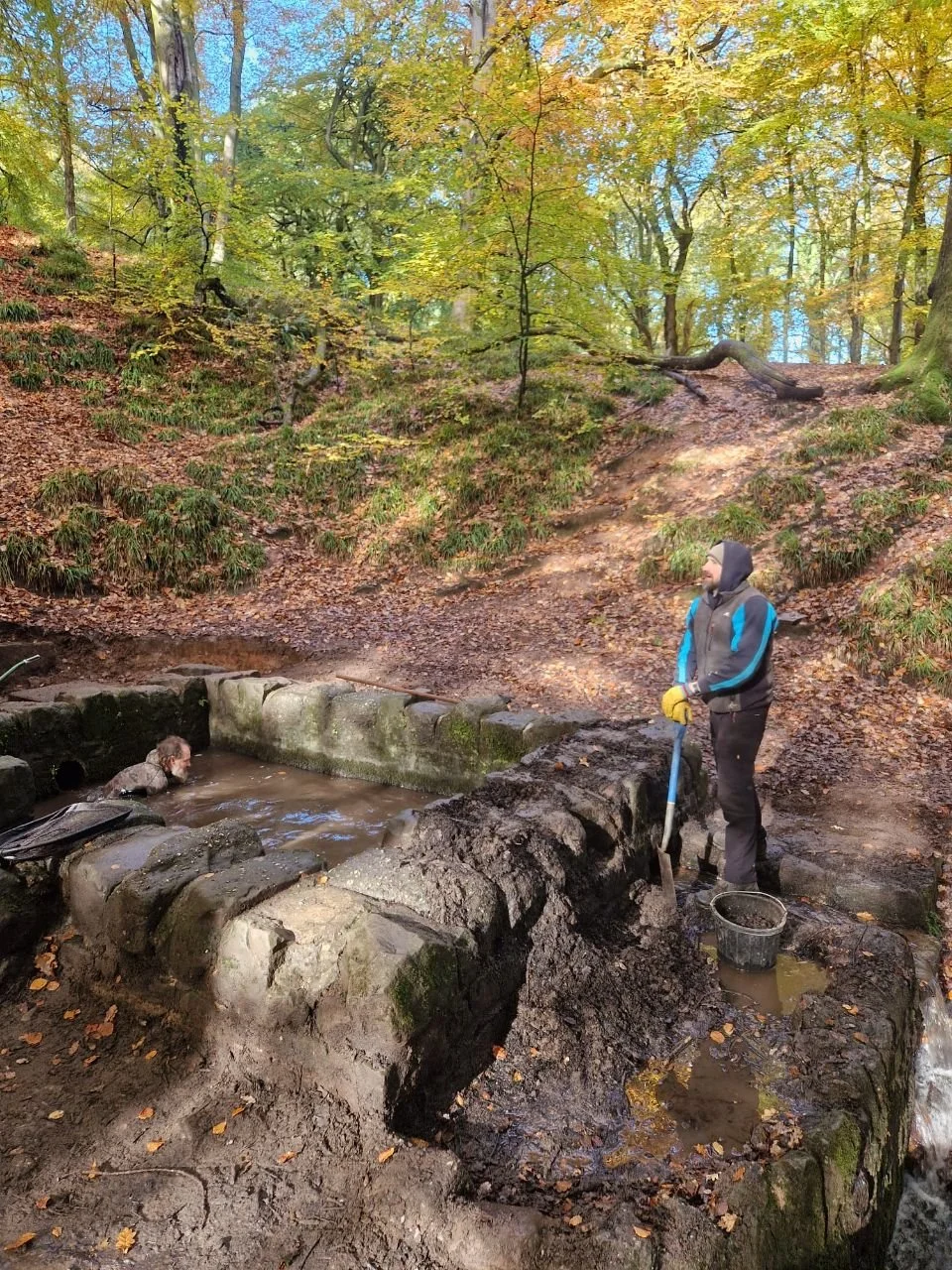
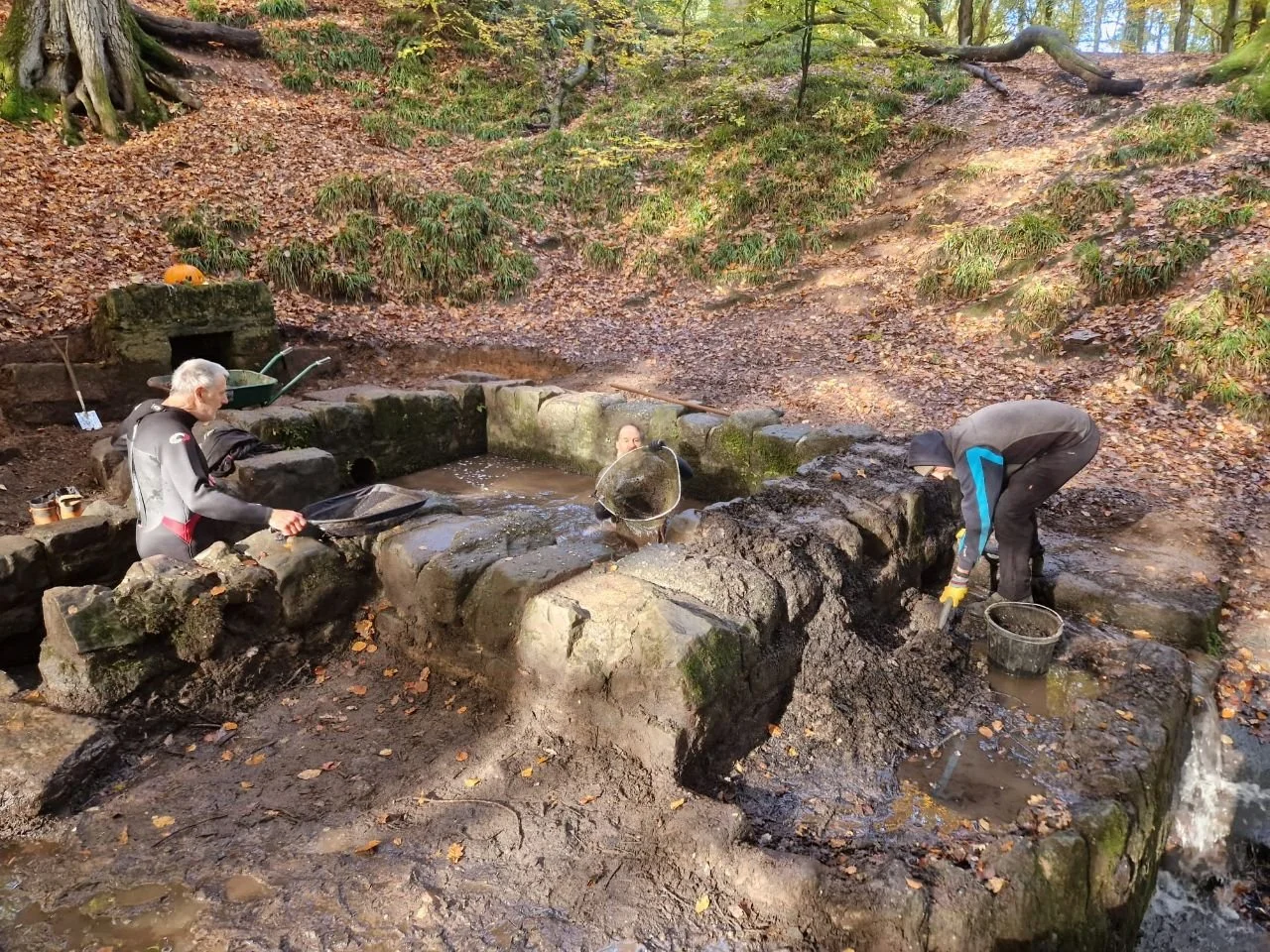
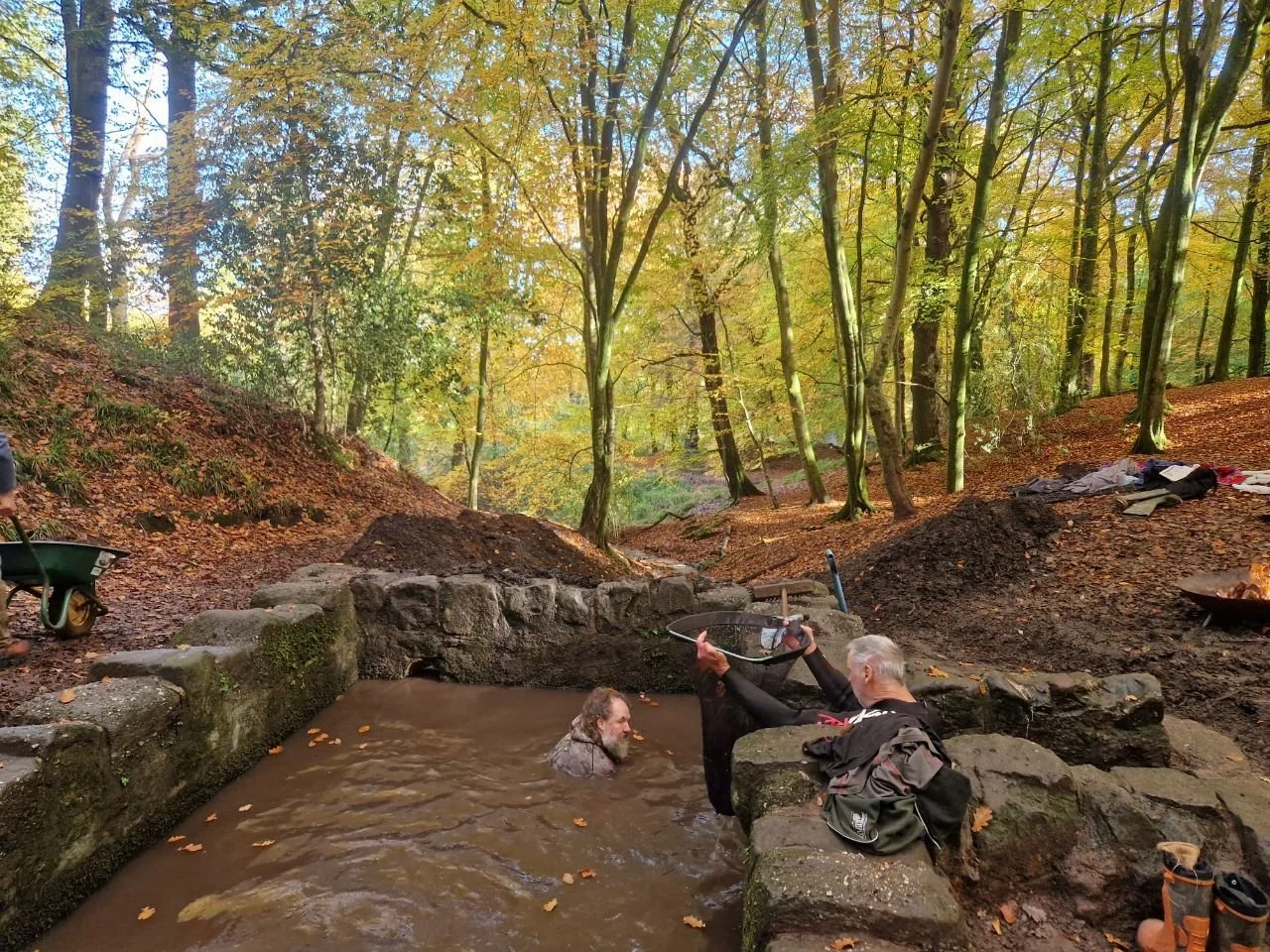
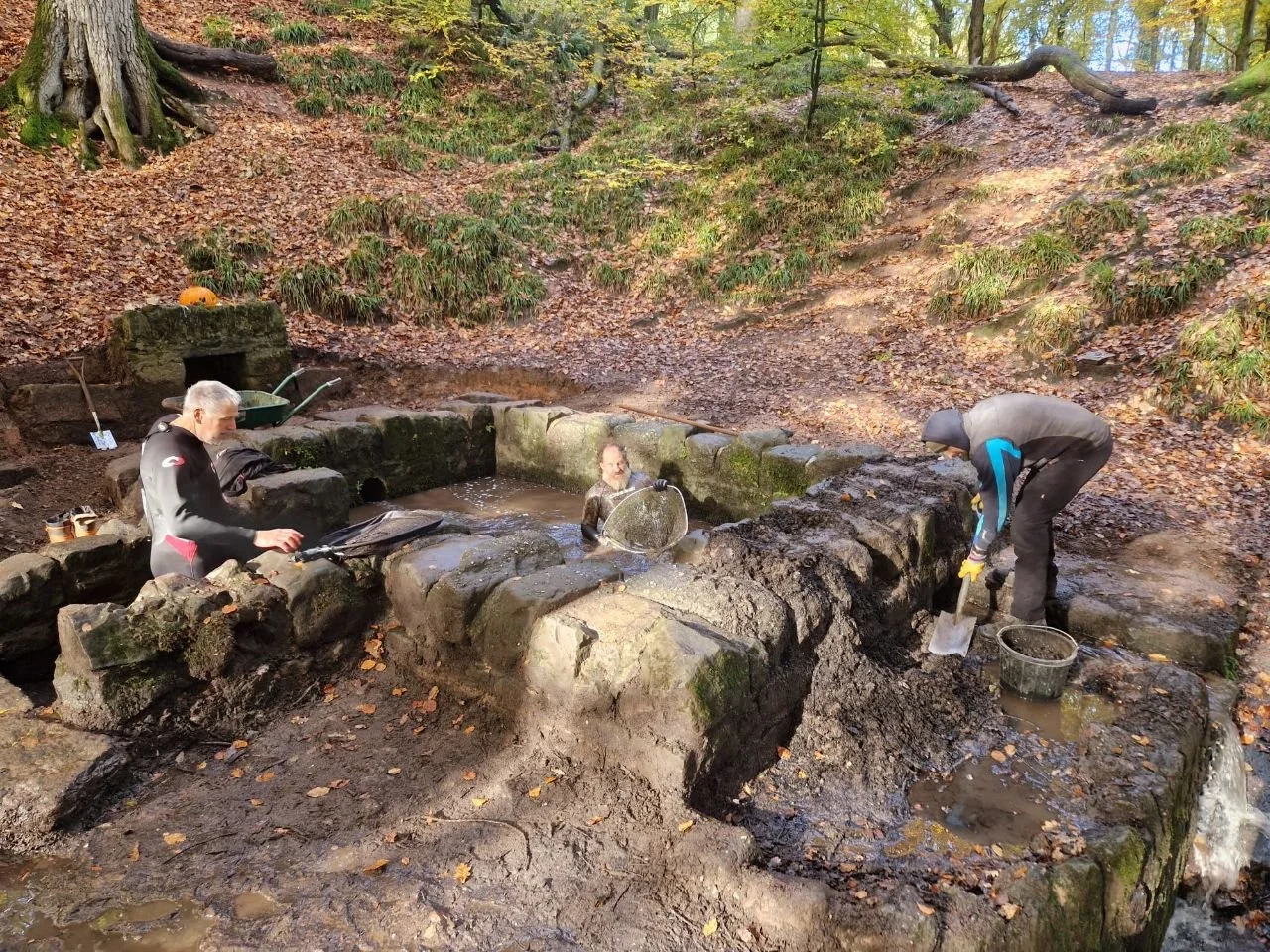
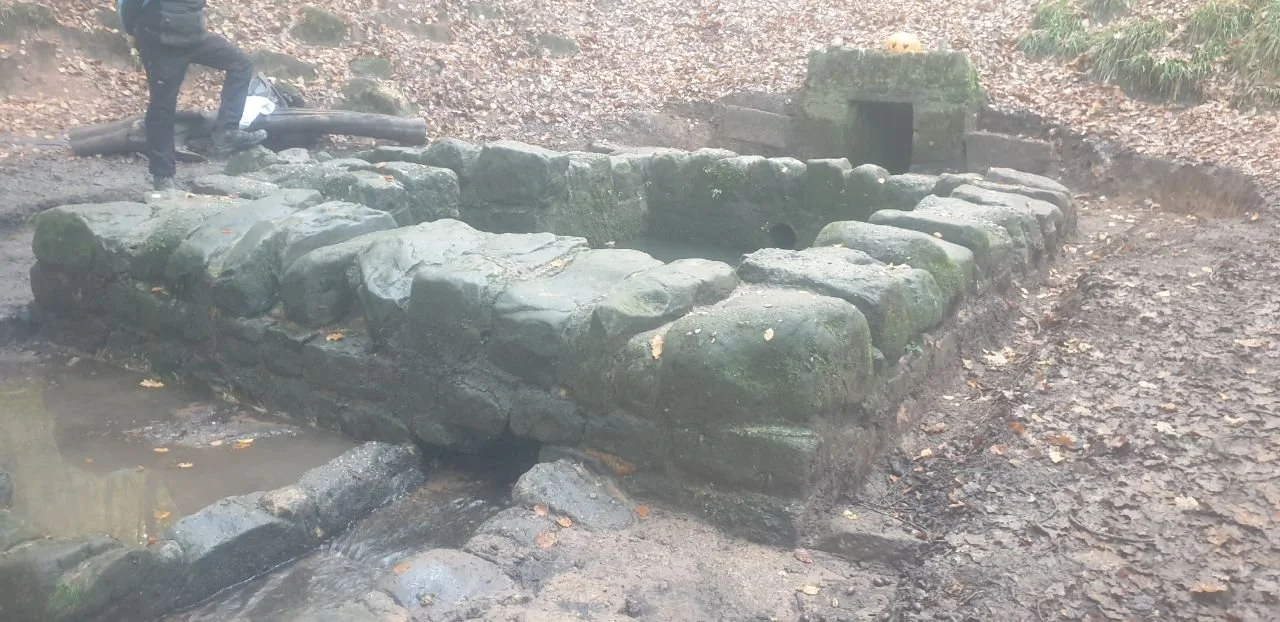
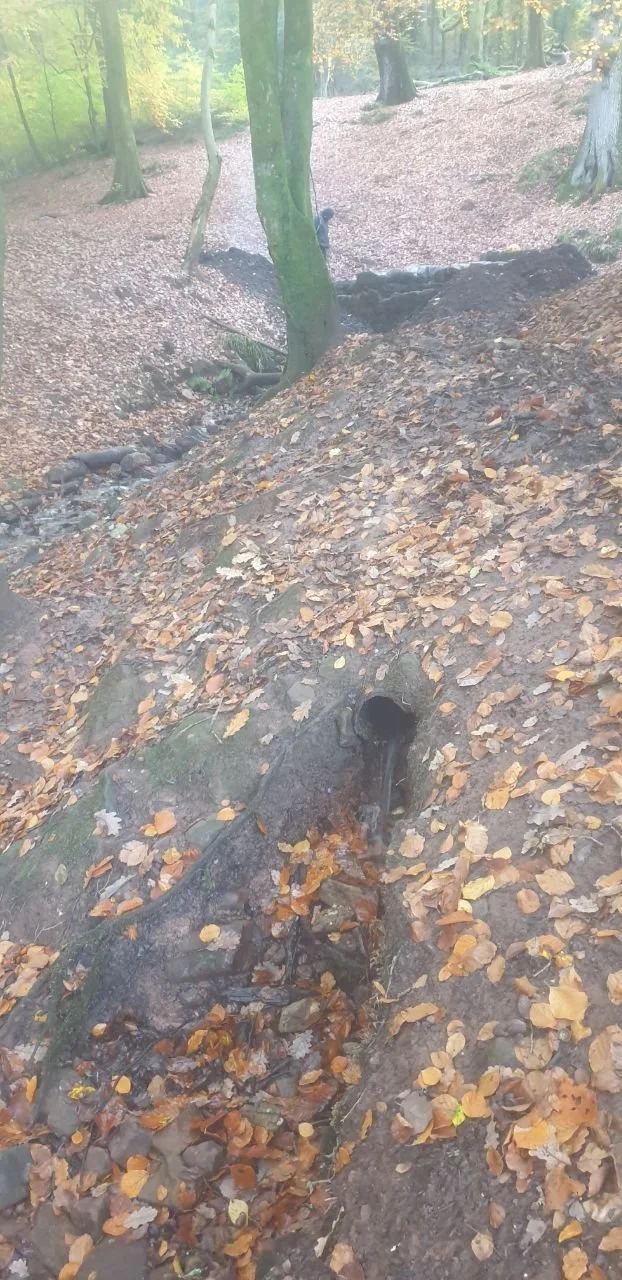
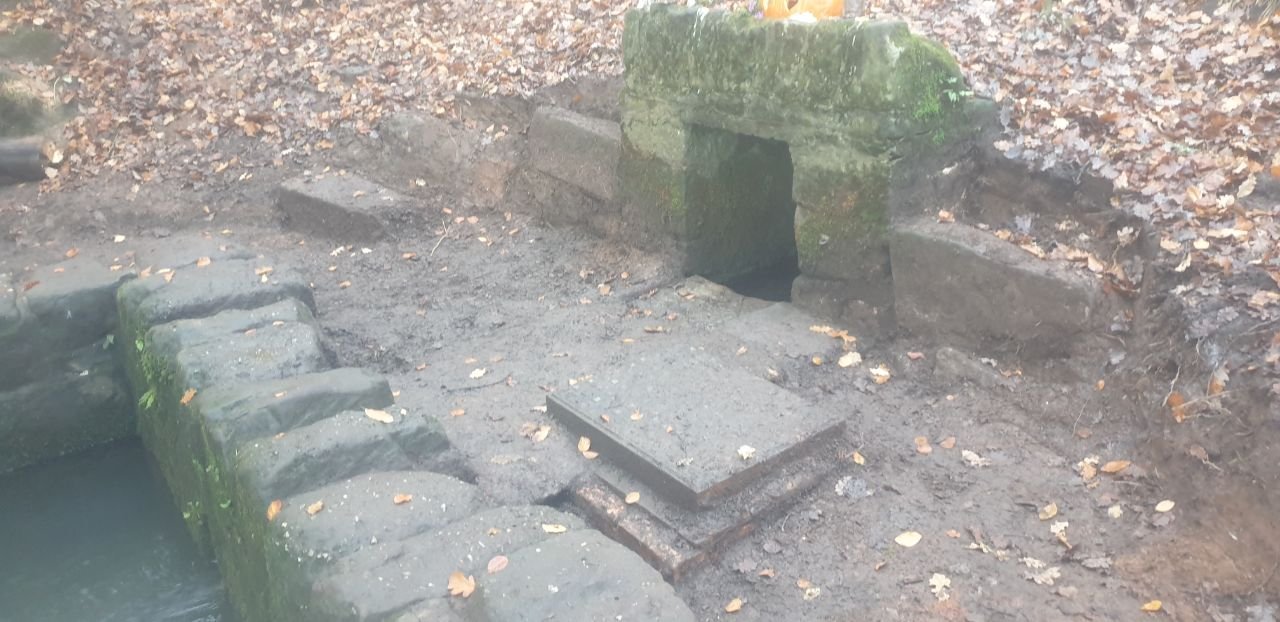
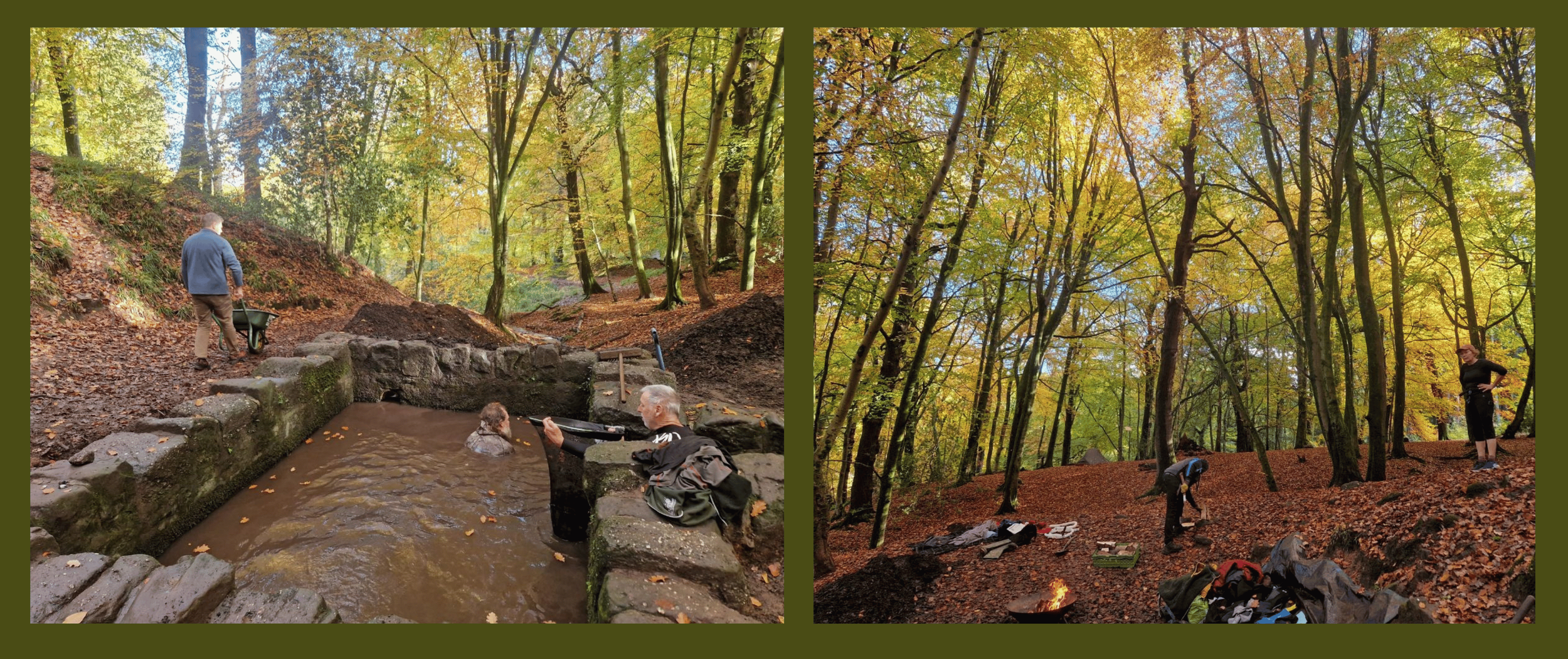
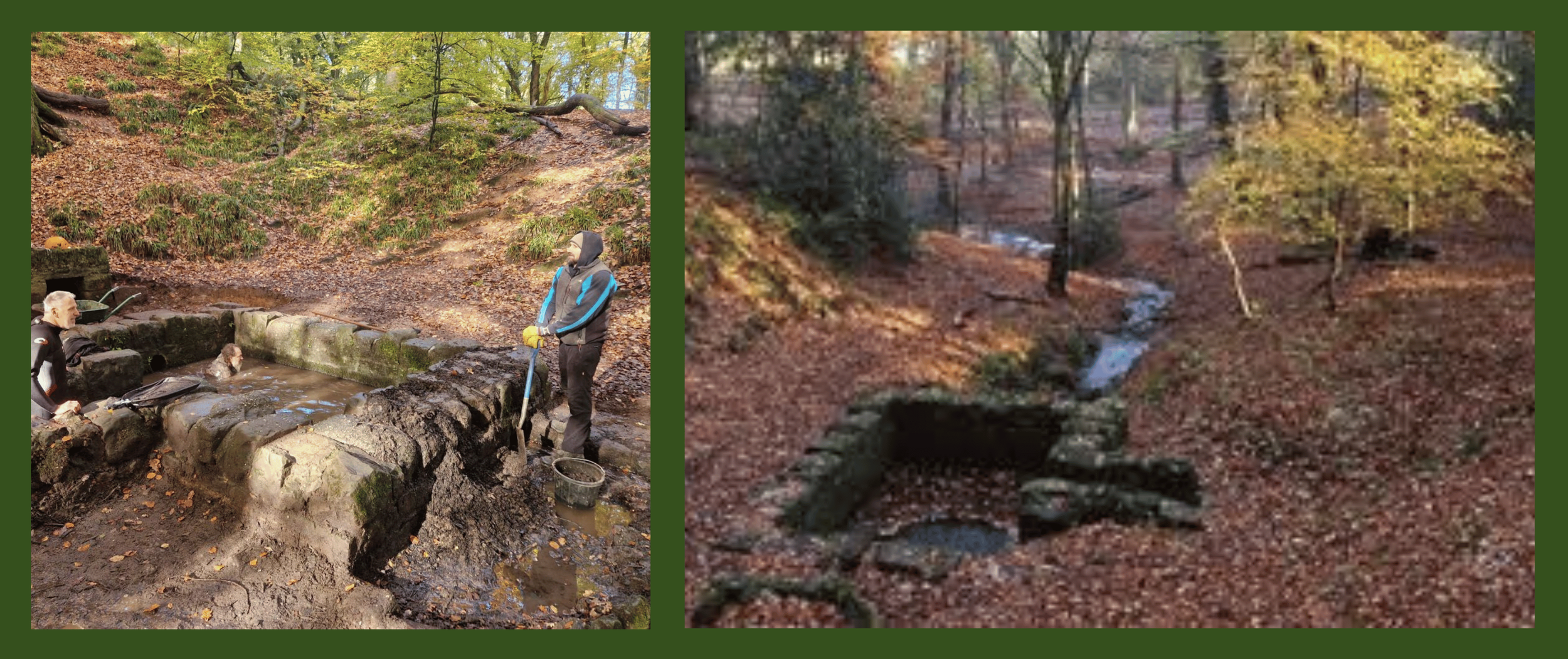
Work began at 10am. The focus was on clearing the well and tidying the surrounding area. A significant amount of digging took place, removing around four years’ worth of leaf mould and soil build-up.
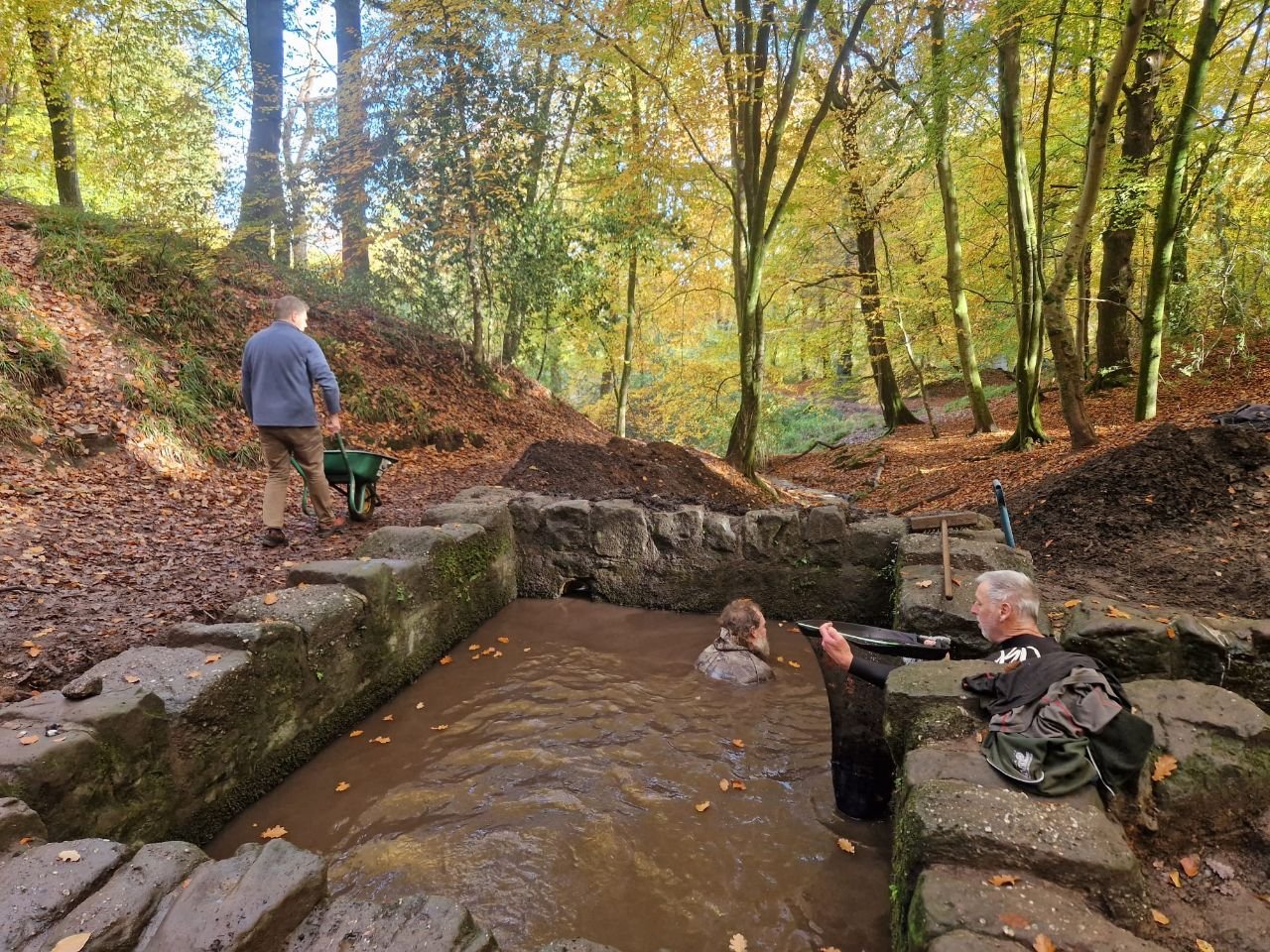
Conditions were assessed throughout the day. Tools used included spades, shovels, buckets, and wheelbarrows. Parking was limited, with some people walking in from Gunns Mill near the ASHA Centre.
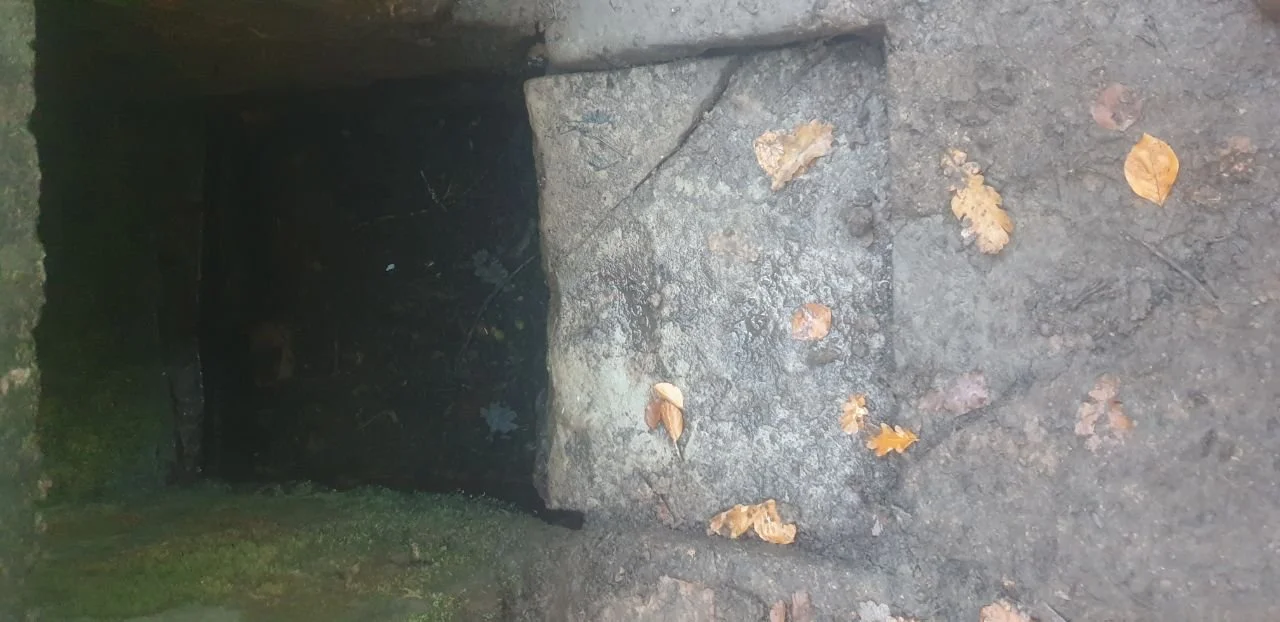
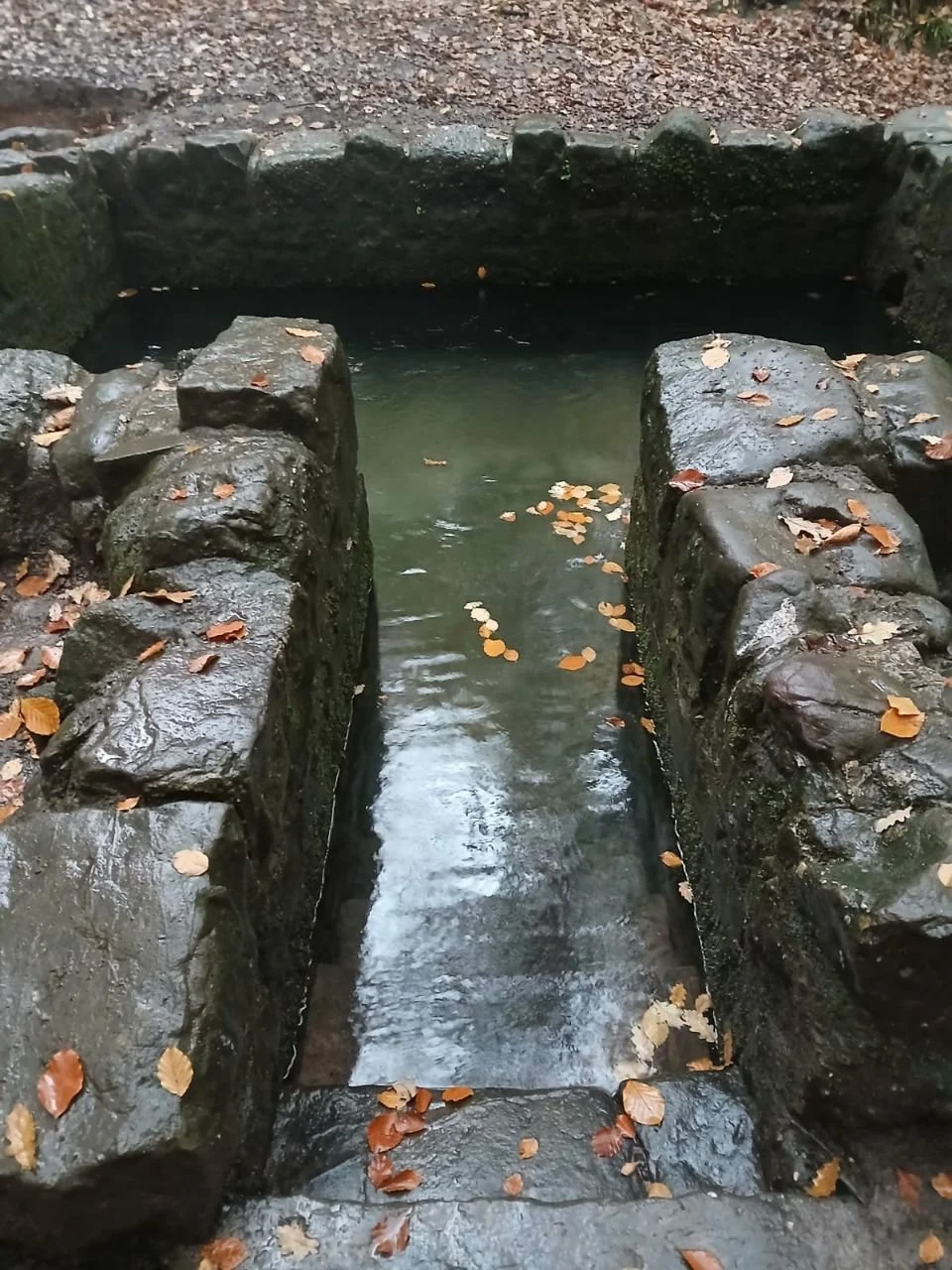
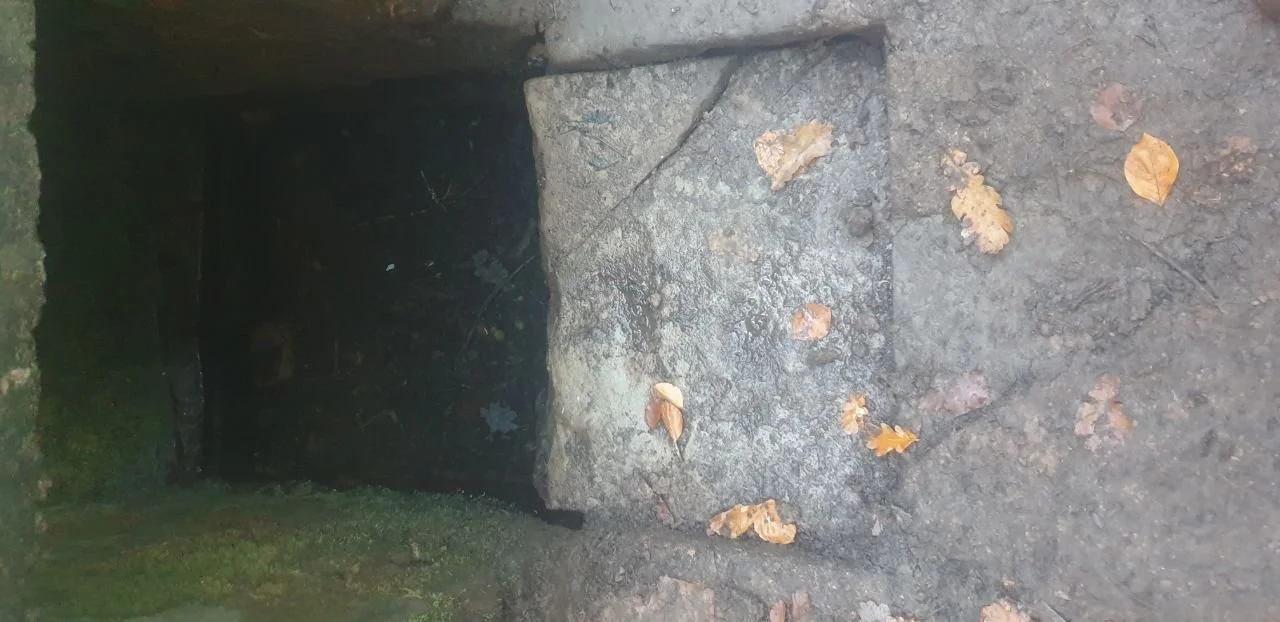
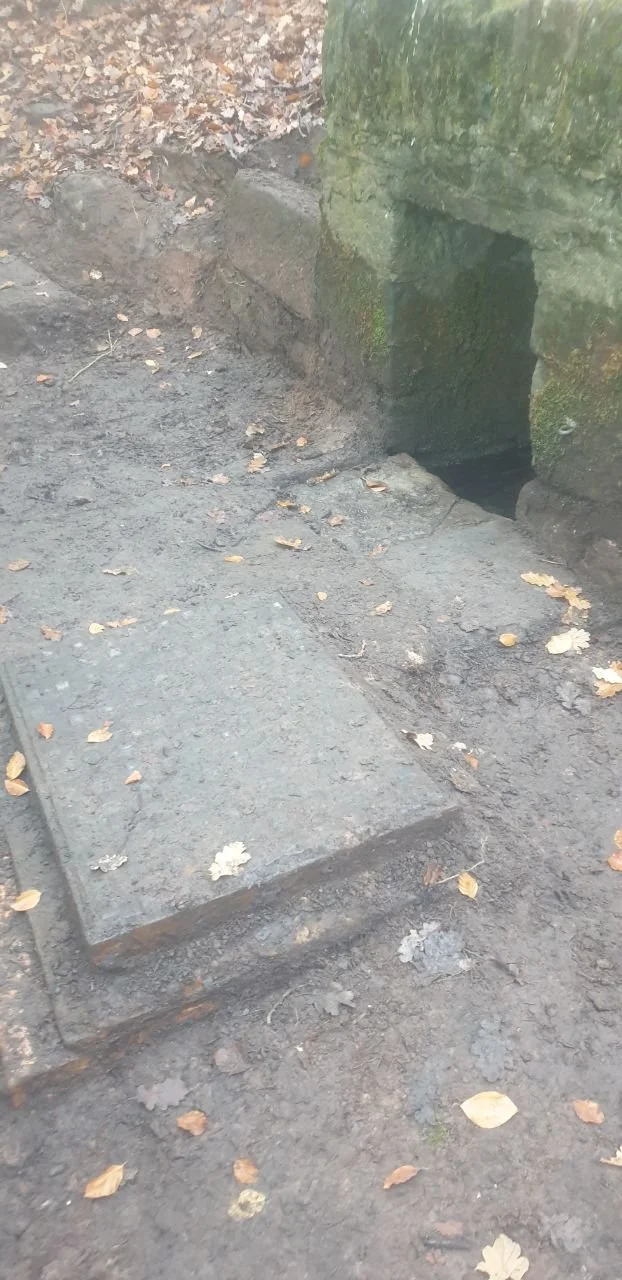
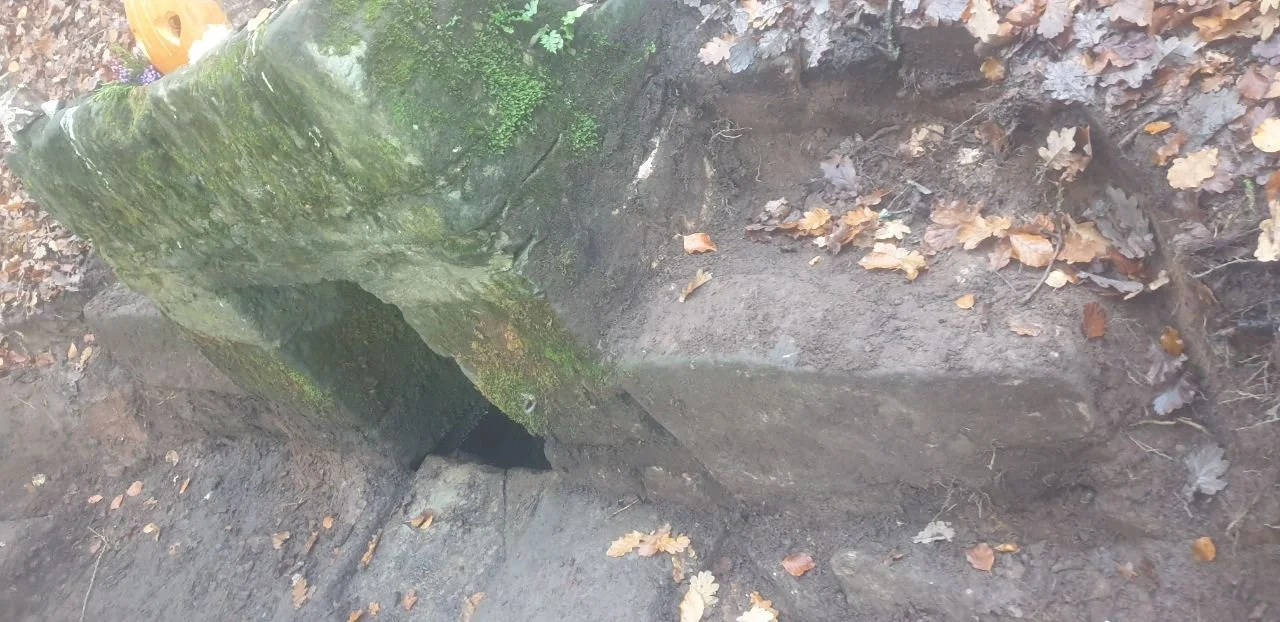
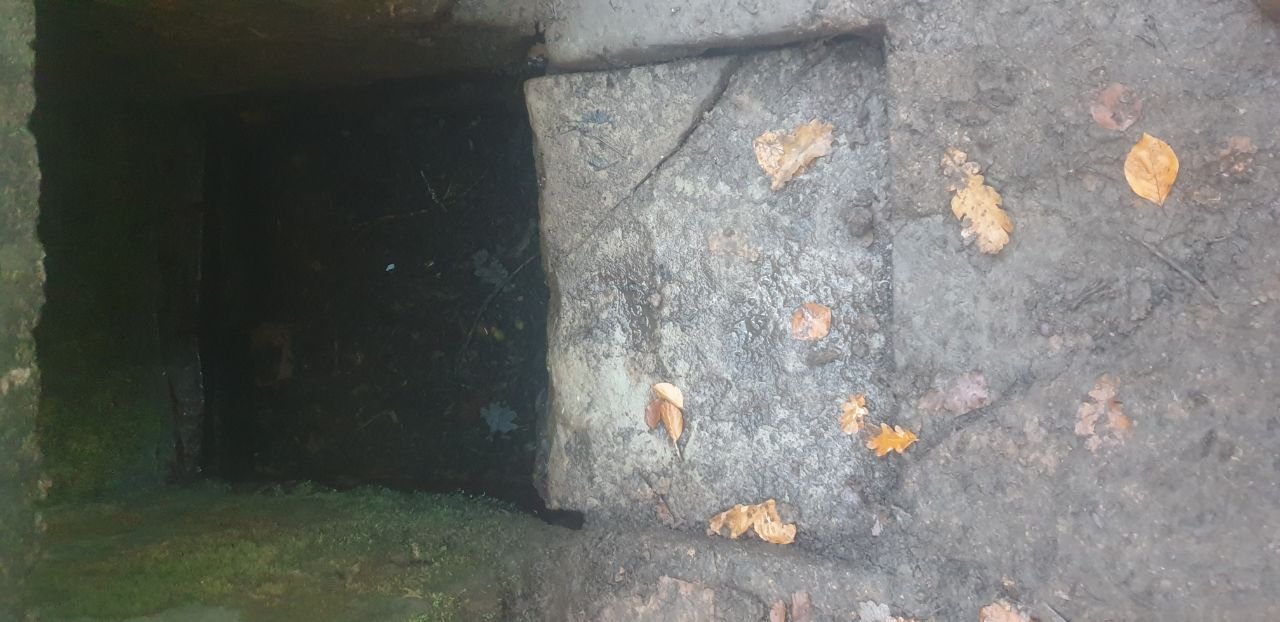
It became clear that a new sandstone slab would be needed for the front of the well head, and plans were discussed for future repairs.
Day 3 – Continued Care & Clearing
(Sunday 2nd November)
The work continued into a second full day of digging and care.
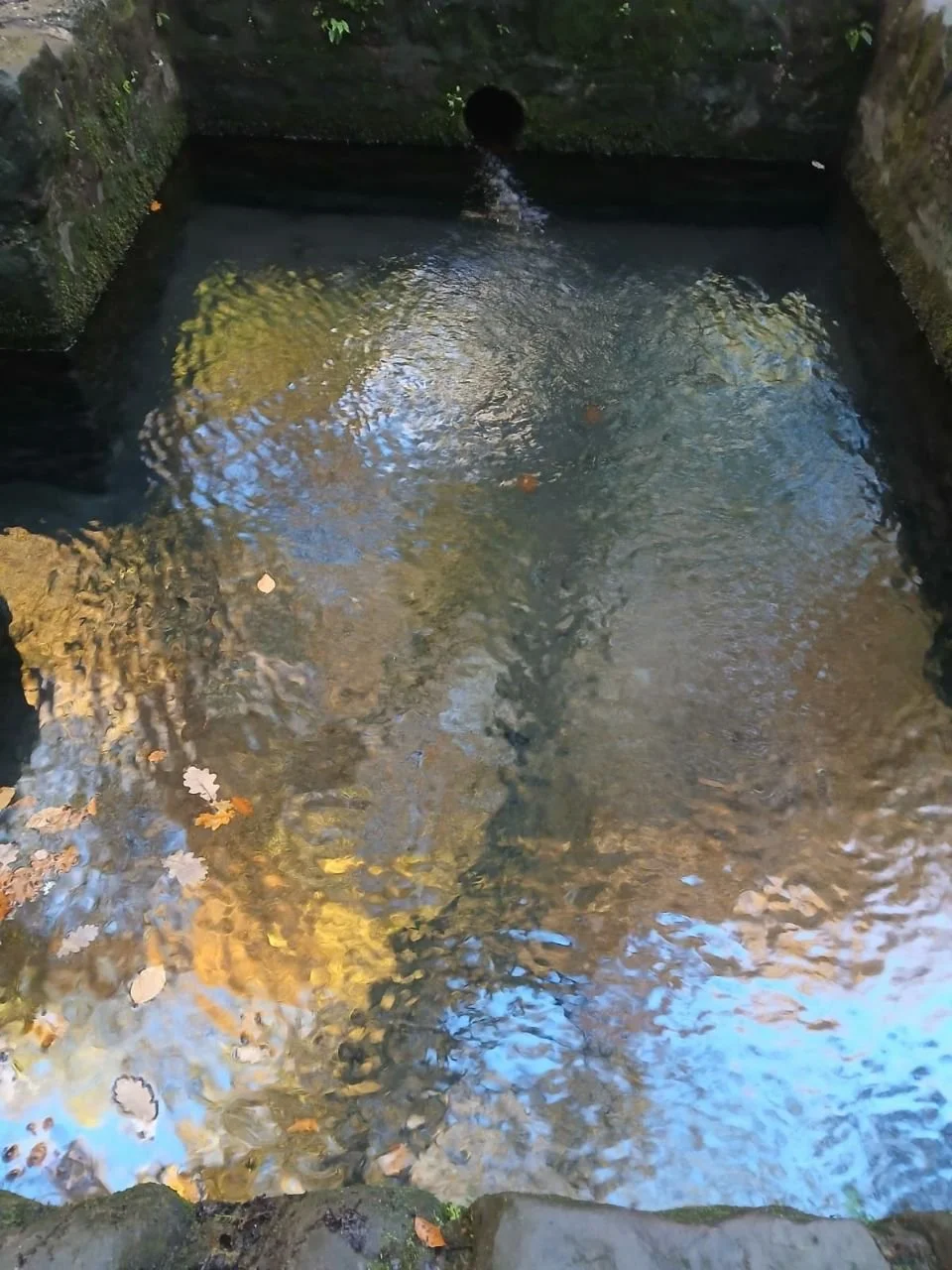
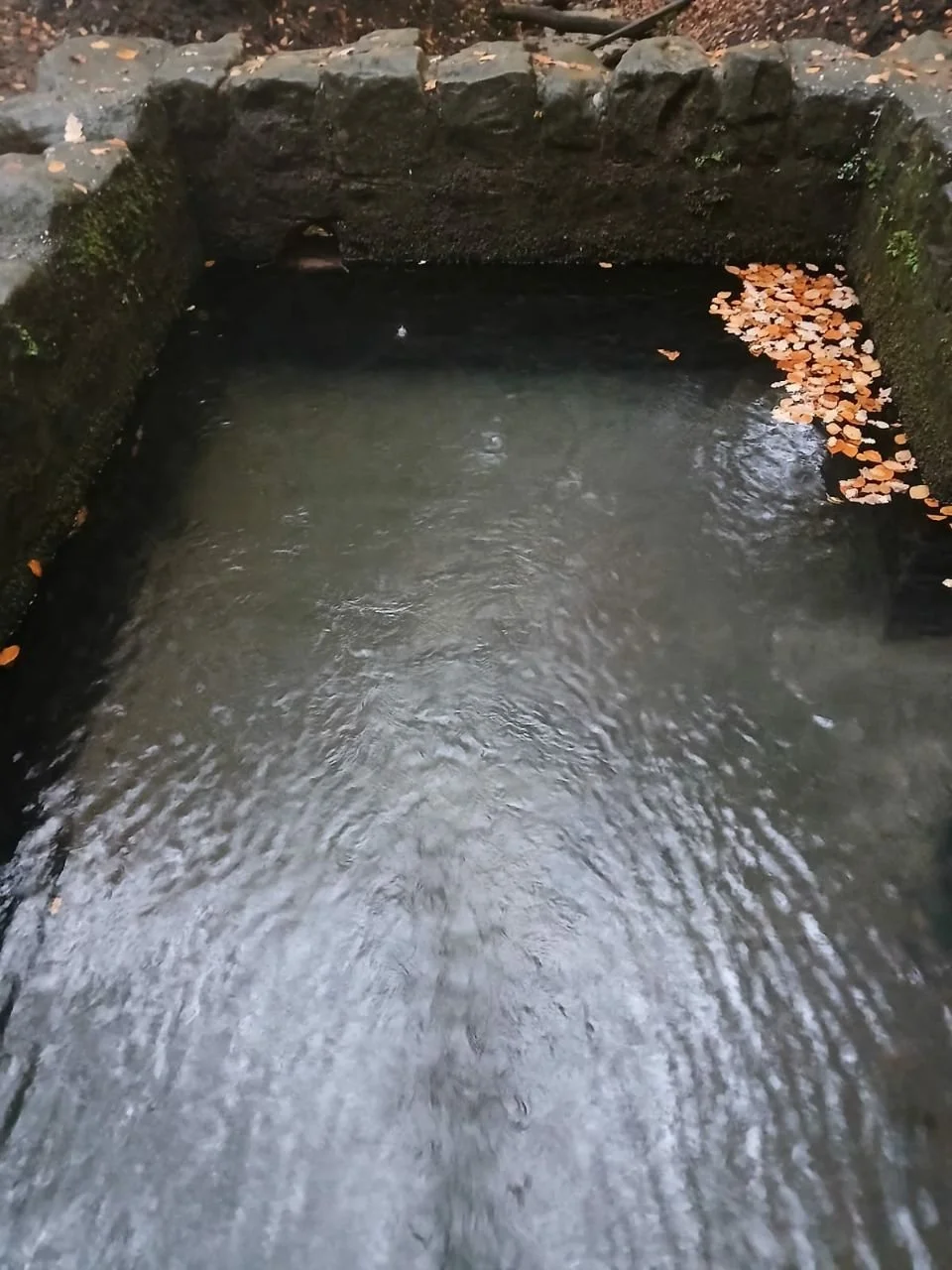
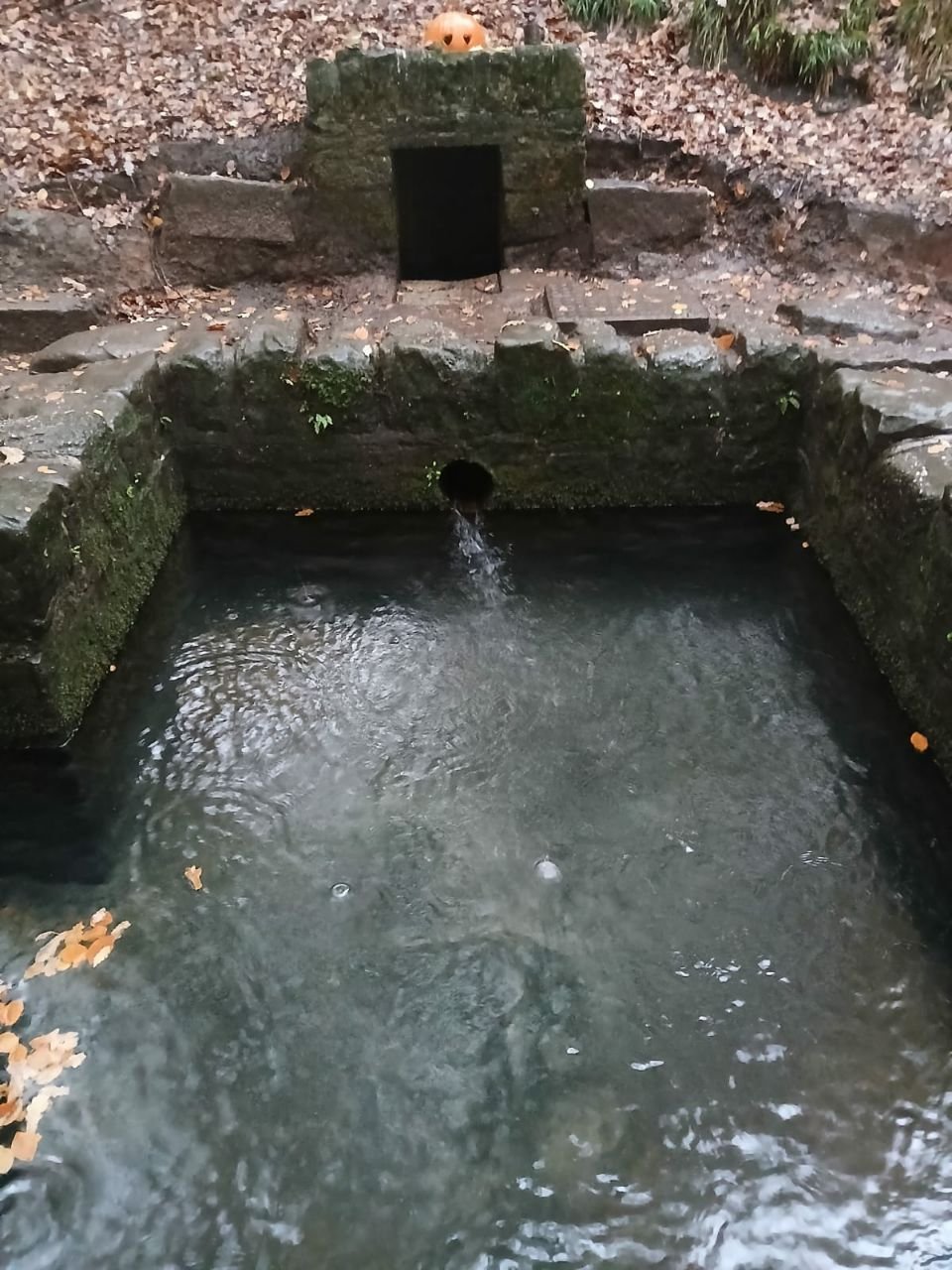
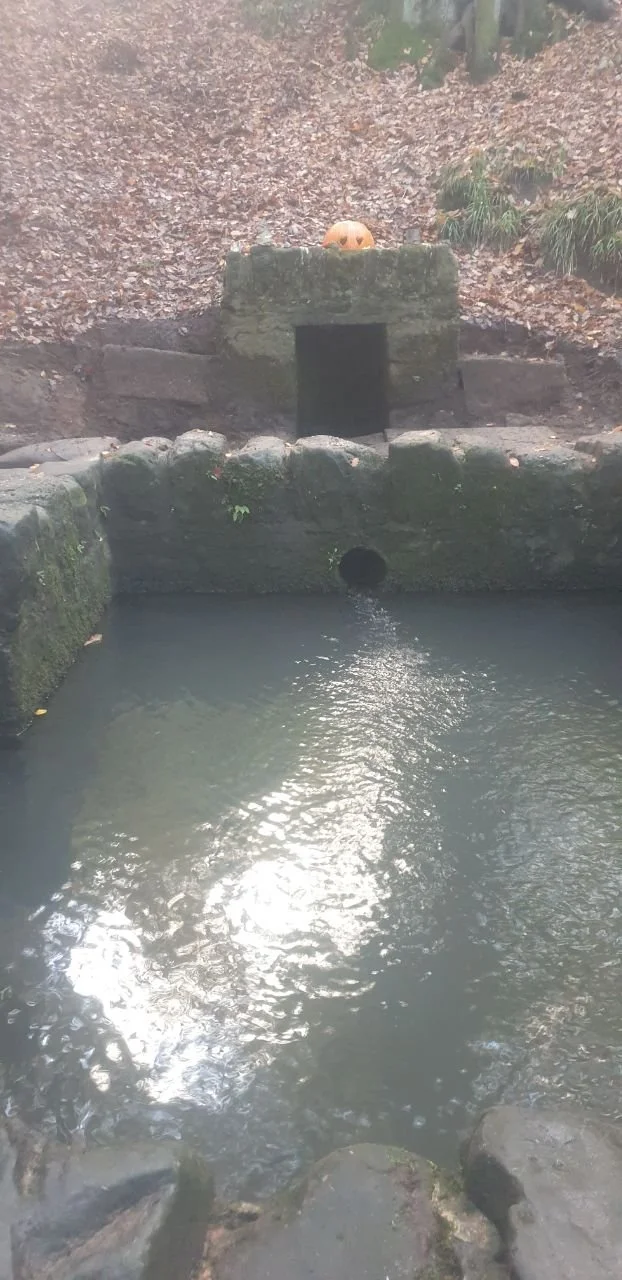
Water cloudiness gradually cleared,
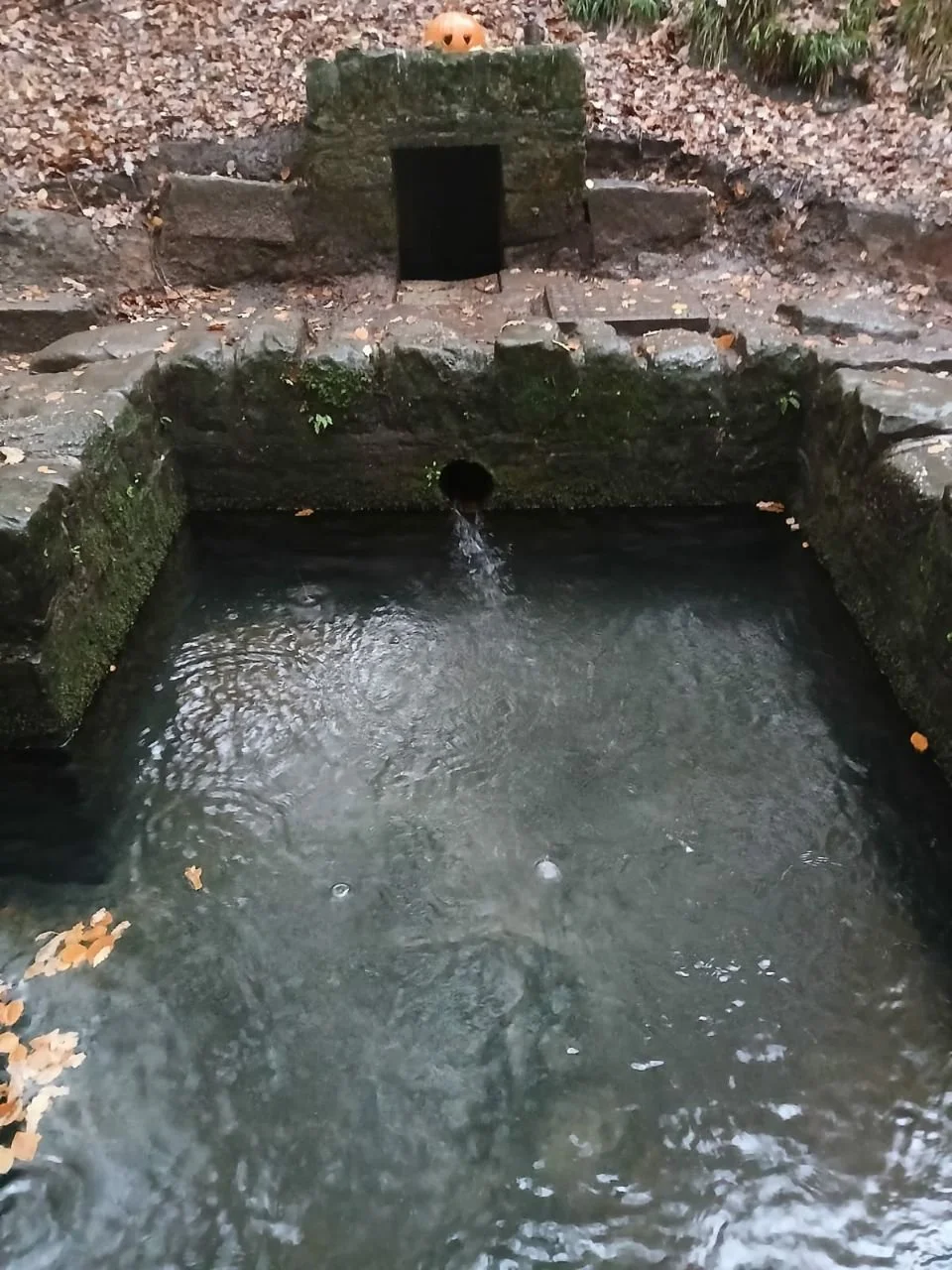
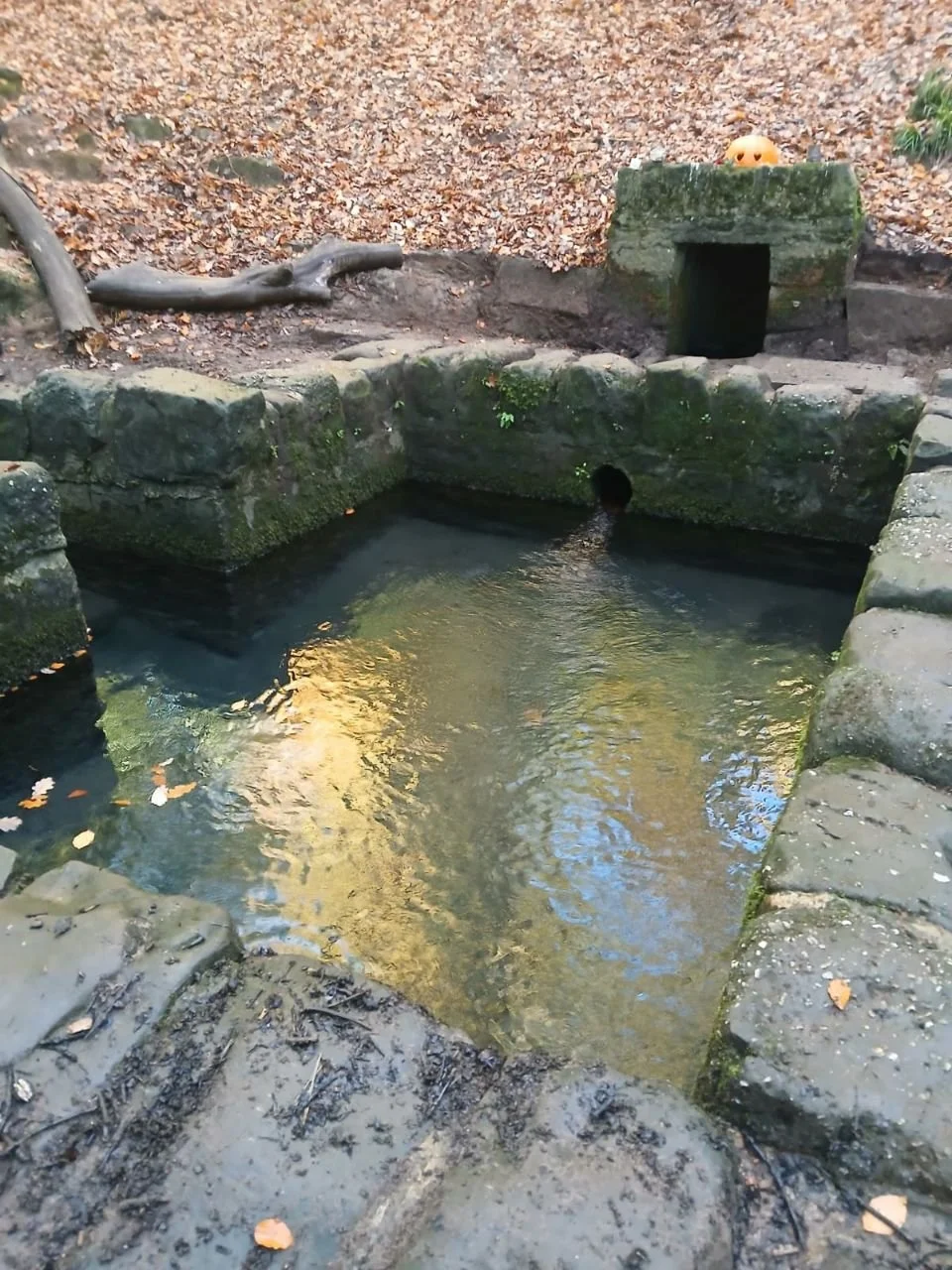
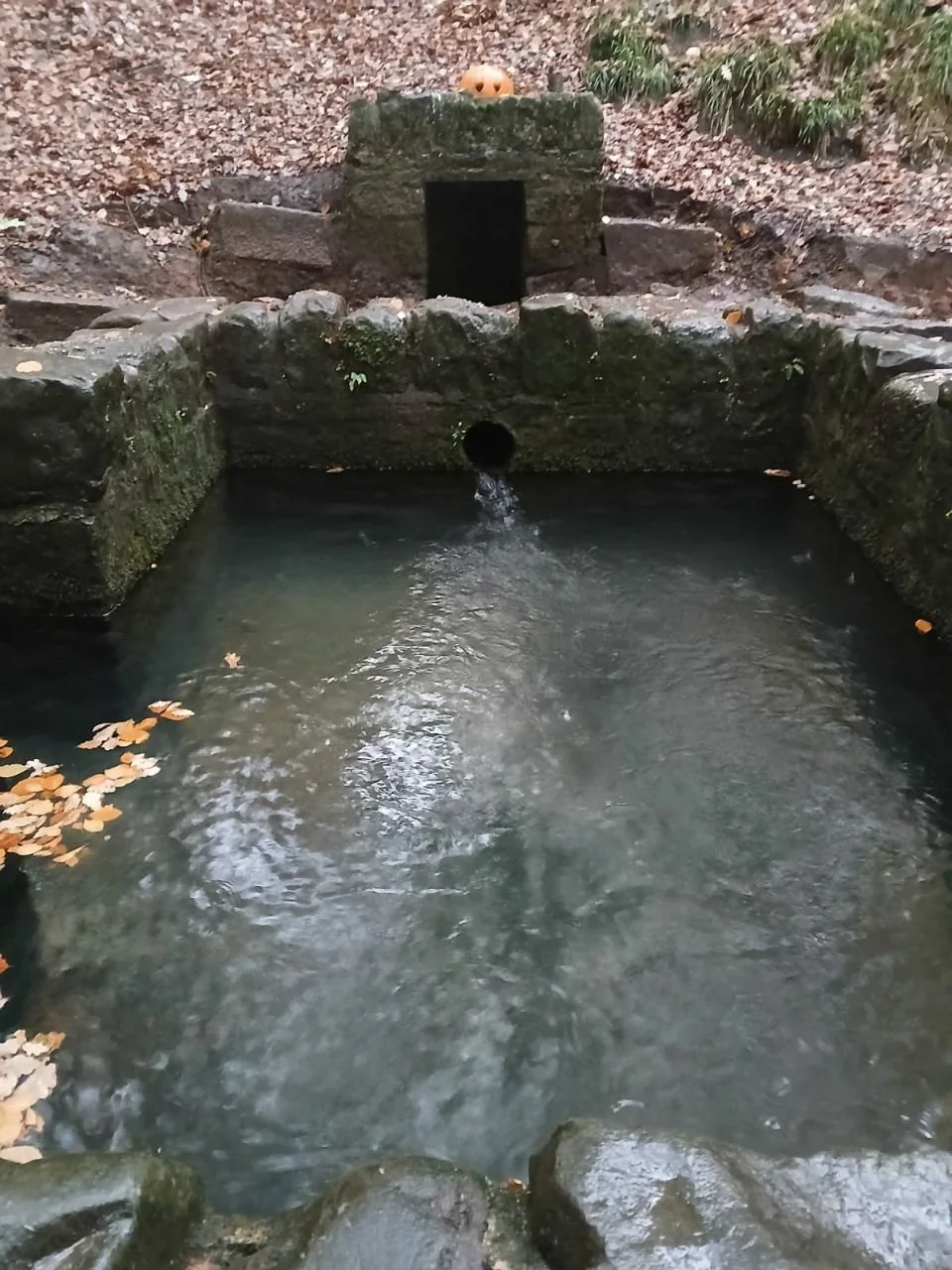
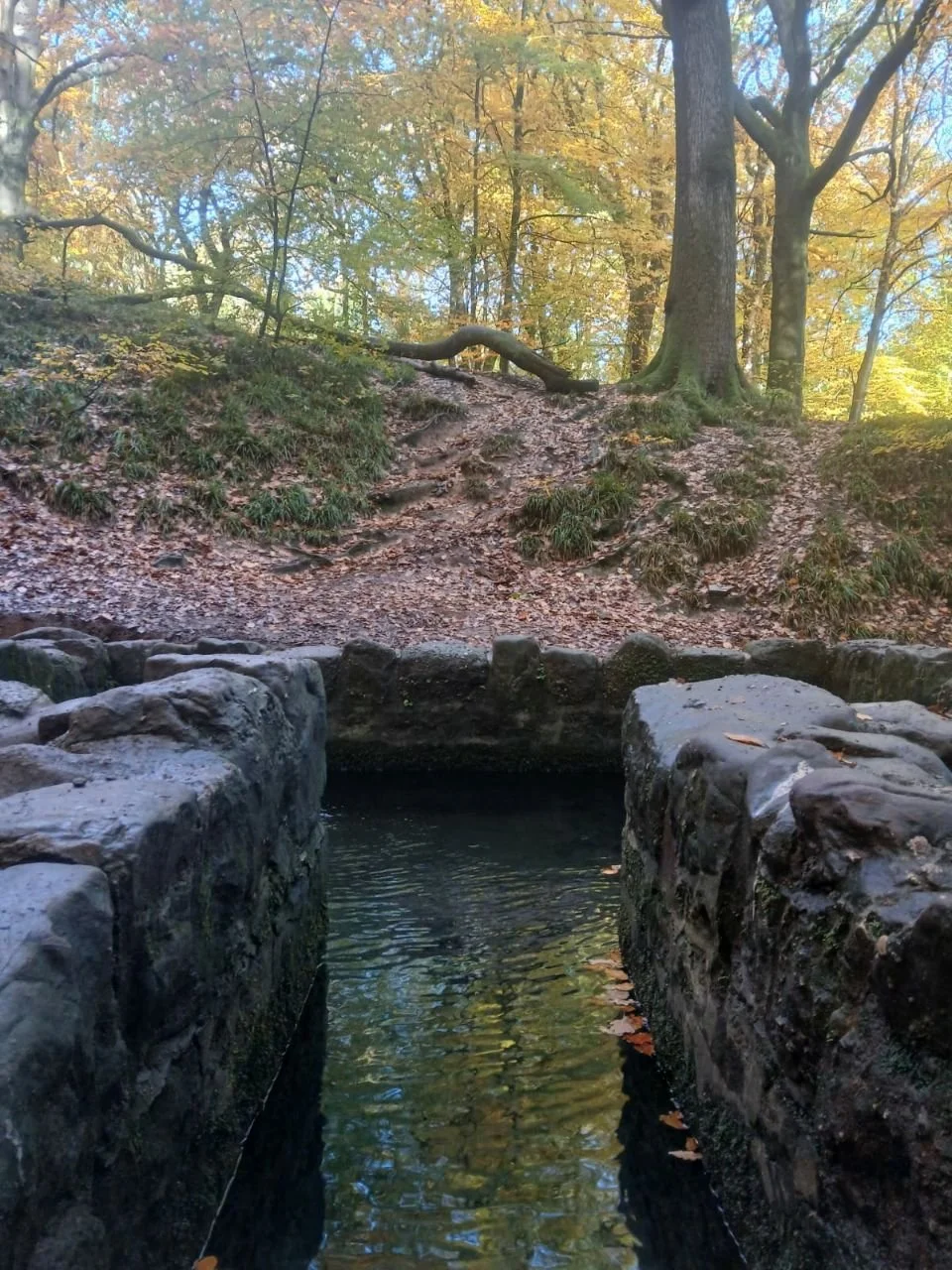
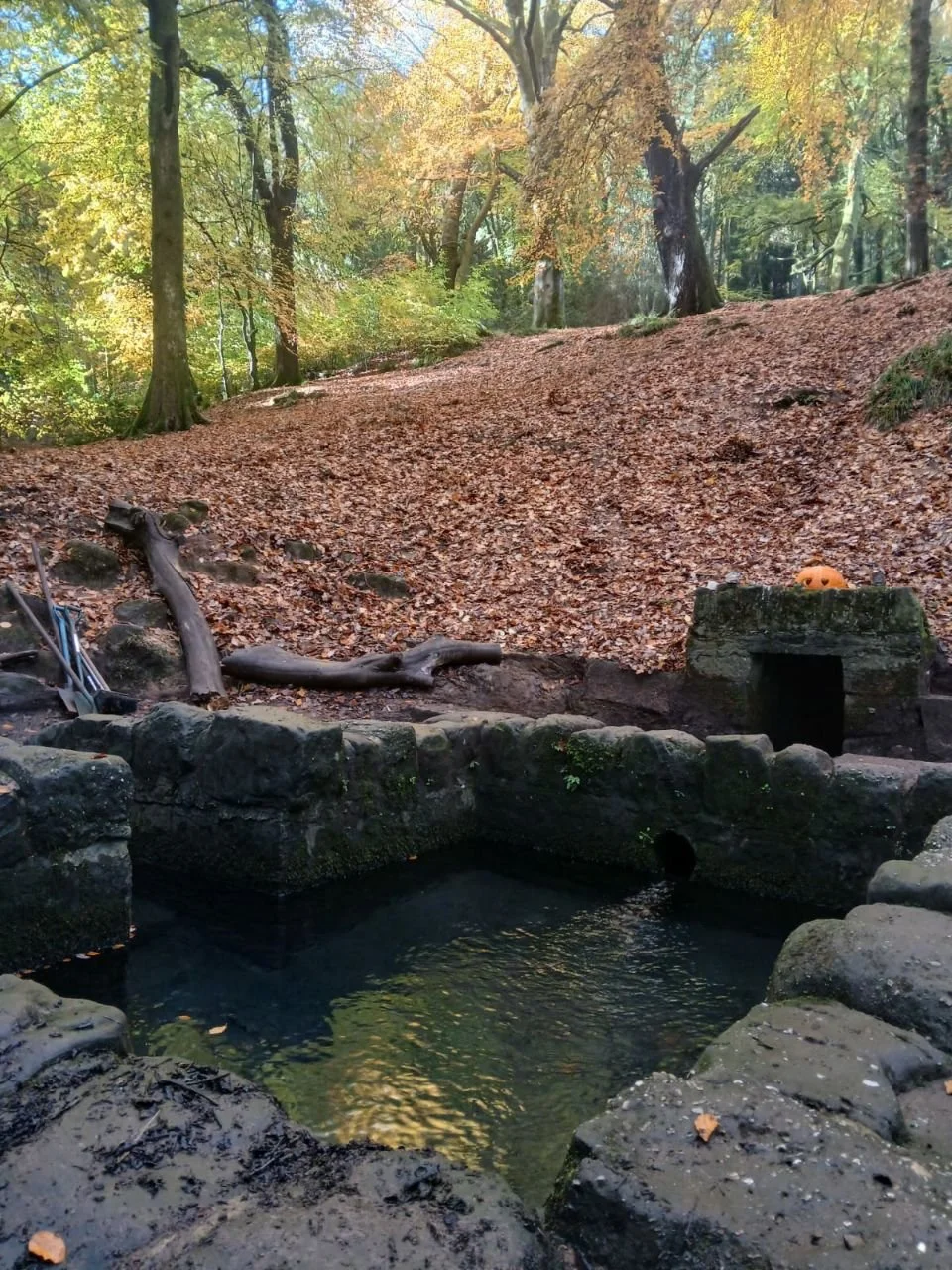
and by the end of the day the bottom of the well was visible and clear,
with no debris or silt present.
Although no blue stones were uncovered,
the overall condition of the well improved significantly.
Special thanks go to Oz the fisherman for two days of commitment,
hard work, and kit, and to Trev for the generous offer of a head stone from Birch Tree Quarry near Fetter Hill.
Donations received during the weekend will go towards serving the wider community and supporting future well-care gatherings.
Reflection – 3rd November
By the 3rd of November, after two full days of physical work, the well had settled.
The water was clear, and the care given felt complete for this cycle.
This work continues a lineage of care. Four years earlier, the pool was fully emptied by hand after diverting the main water flow, and the floor was scrubbed once the water was almost entirely removed.
Looking Ahead – Imbolc
(1st February 2026)
The next proposed clean-up is planned for Imbolc, 1st February 2026.
With enough collective energy and support, the intention is to fully empty the well again and carry out deeper cleaning and repair.
This ongoing work is part of a wider commitment to water sovereignty
– protecting and preserving our wild water through community stewardship.
Let the water cleanse and flow through us.