St Anthony’s Well
St Anthony’s Well sits at the head of a brook in the Flaxley valley and has long been known locally as a place of healing. Older accounts describe it as widely visited for skin complaints, with a traditional practice of visiting at sunrise in May, repeated nine times — folklore, yes, but rooted in a long memory of the well being “good for the skin.” Project Gutenberg
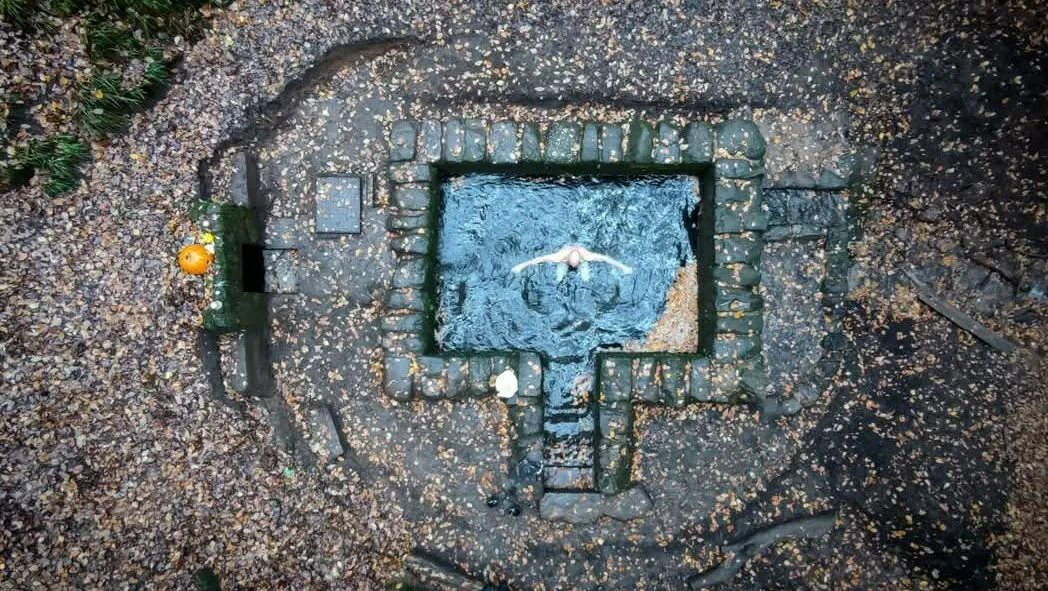
The stone bathing pool beside the spring is described in 19th-century writing as a square stone basin created at the start of the 1800s “for the convenience of bathers,” tucked away in a secluded woodland hollow. The same account notes the water as abundant, containing iron and lime, and being notably cool. Project Gutenberg
Today the site is formally protected as a Grade II listed structure (Historic England). Historic England
Recent history: community
In recent years, local stewardship has brought the well back from decline. Local press coverage records volunteers from The Rewild Project clearing the pool over two days, revealing the pool floor again and making the space safer and more accessible. The Forester
With sacred natural water sources a key tenet of our beliefs at TRP, it felt inevitable to want to care for this place and bring it back towards its healing potential.
People gather at water. It’s in our blood, our bones, our DNA. Water is the source of all life, and one of the most ancient ways humans come together — to drink, to wash, to heal, to mark change.
In 2020, Scott organised two community work days at St Anthony’s Well. People came from across the Forest of Dean — pagans, walkers, a singing group, families, curious passers-by. Many volunteered to pull on wetsuits and step straight into the cold water, bucketing, lifting, and working together without fuss.
The first day was hard going. Lowering the water level enough to begin shifting the deep silt took time, patience, and a lot of physical effort. On the second day, a crucial piece of local knowledge emerged: a nearby manhole that controlled the water flow. A local resident appeared with the key. Once opened, we were able to redirect the water around the bathing pool rather than into it. The water level dropped rapidly. The silt could finally be removed properly, and for the first time in years the bottom of the well was exposed and scrubbed clean.
As we worked, we uncovered small treasures — each carrying its own quiet story. A pair of glasses. A piece of rose quartz, later learned to have been placed there during a handfasting ceremony. Coins, tokens, offerings, wishes. Some were upset that these items were removed. But a well cannot indefinitely hold everyone’s prayers and possessions without becoming blocked and degraded. With care and respect, the objects were placed further downstream, allowing the symbolic intention to continue without compromising the well itself.
Since that initial restoration, the well has seen renewed life. Families, children, educational visits, picnics. Ceremonies, gatherings, drumming and singing circles. Some people arrive with a lifelong relationship to the place, returning to rituals they have held for forty years or more. Others experience something unexpectedly profound on a first visit. Each connection is different. All are valid.
These relationships — with place, with story, with ritual — are what make us human. They form the inner compass that draws us back to elemental forces when the modern world feels too loud, too fast, too disconnected.
As for the water itself: although it has never been formally tested, many people collect it — some for ritual or magical use, others to drink. It is widely understood to have a higher mineral content than nearby Bordon Well, which lends itself particularly to ceremonial use. With no farmland above the spring, there is no agricultural runoff, and there are no known sources of contamination — but each person must decide for themselves how they choose to work with the water.
Whatever your relationship to sacred water, holy wells, or quiet places, you are likely to find your own moment of reflection here — a pause, a listening, a remembering.
Go well.